

Industry News
 Home / News / Industry News / Why the Rectangular Area Carpet Is the Most Versatile Floor Covering You Can Buy
  2026.04.01
 Industry News
The rectangular area carpet is the workhorse of interior design — the most widely used, most versatile, and most forgiving floor covering format available. Its straight sides and right-angle corners align naturally with walls, furniture, and architectural features, making it the logical first choice for the vast majority of rooms and furniture arrangements. Whether you're anchoring a living room seating group, defining a dining area, softening a bedroom floor, or adding warmth to a home office, a well-chosen rectangular area carpet does the job cleanly and consistently in a way that no other shape quite matches.
The rectangular format is available in the widest range of sizes, materials, patterns, and price points of any rug shape. From a simple 2×3 ft cotton flatweave accent to a grand 10×14 ft hand-knotted wool statement piece, the rectangular area carpet covers every room, every budget, and every aesthetic direction with more options than any other format. Understanding how to evaluate and choose among those options — size, material, construction, pattern, and placement — is what separates a carpet that transforms a room from one that merely occupies floor space.
Content
Knowing which rectangular area carpet sizes exist before you start measuring helps you plan your space around what's actually available without resorting to expensive custom orders. Here's a comprehensive reference guide to the most common sizes and their best applications:
|
Size |
Dimensions |
Best Room Use |
Furniture It Fits |
|
Accent / Extra Small |
2×3 ft / 3×5 ft |
Entry, bathroom, bedside |
Entry bench, vanity, nightstand |
|
Small |
4×6 ft |
Small bedroom, reading nook, home office |
Twin bed foot, small desk setup |
|
Medium |
5×8 ft |
Small living room, apartment dining, office |
Loveseat + chair, small dining table (4 seats) |
|
Large |
6×9 ft / 8×10 ft |
Living room, dining room, master bedroom |
Sofa + chairs, 4–6 seat table, queen bed |
|
Extra Large |
9×12 ft / 10×13 ft |
Large living room, formal dining, open plan |
Full sectional, 6–8 seat dining table, king bed |
|
Oversized |
10×14 ft / 12×15 ft+ |
Grand rooms, loft spaces, open-plan zones |
Large sectional, 8–10 seat table, full bedroom suite |
|
Runner |
2×6 ft / 2.5×8 ft / 3×10 ft |
Hallway, kitchen, beside bed |
Galley kitchen, long hallways, beside twin or queen |
A crucial reminder when using this chart: always verify the exact product dimensions rather than relying on the size label alone. Manufacturing tolerances mean that a rug listed as "8×10 ft" may actually measure 7'10" × 9'10". When working with precise spatial constraints — ensuring a carpet doesn't overlap a baseboard heater, doorway threshold, or adjacent furniture leg — those 2–4 inches matter considerably. Always confirm exact dimensions in the product listing before purchasing.
The right rectangular area carpet size for any given room depends on two things: the dimensions of the room itself and the furniture arrangement within it. A carpet that's perfectly sized in isolation can still look wrong if it's positioned incorrectly relative to the furniture it's meant to anchor. Here's how to get both right, room by room.
In the living room, the rectangular area carpet's job is to visually tie the seating furniture together into a cohesive grouping. The three standard approaches — all furniture legs on the carpet, front legs only on the carpet, or just the coffee table on the carpet — each produce a different visual effect. The all-legs-on approach looks the most polished and generous, requiring a 9×12 ft or 10×14 ft carpet for most standard sofa-and-chairs arrangements. The front-legs-on approach is the most practical compromise, working well with an 8×10 ft carpet in most living rooms and giving just enough coverage to anchor the group without requiring a very large (and expensive) carpet.
The carpet should leave 18–24 inches of bare floor visible between its edge and the wall on all sides in a standard room. Less than 12 inches makes the carpet look like failed wall-to-wall carpeting; more than 30 inches makes it look undersized and lost. In open-plan spaces without clear wall boundaries, the carpet defines the zone rather than relating to walls — position it to encompass the seating group with enough overhang beyond the furniture to look intentional.
The dining room has the clearest sizing rule of all: add at least 24 inches — and ideally 30 inches — to every side of the dining table to determine the minimum carpet size. This ensures that all dining chair legs remain fully on the carpet even when chairs are pulled away from the table for seating and standing. A chair whose back legs constantly slide off the carpet edge is a daily source of frustration, and it causes the carpet to shift and bunch over time. For a standard 36×60 inch dining table, a 8×10 ft rectangular area carpet provides the right clearance. For a larger 40×84 inch table, a 9×12 ft or 10×14 ft carpet is necessary.
In the bedroom, a rectangular area carpet should extend at least 18–24 inches beyond the sides of the bed and generously beyond the foot to provide soft flooring where bare feet land first thing in the morning. For a queen bed, an 8×10 ft carpet typically works well with the headboard end tucked 12–18 inches under the bed frame. For a king bed, step up to a 9×12 ft for proportionally balanced coverage. The carpet can run either parallel to the bed (conventional) or perpendicular at the foot of the bed for a more boutique-hotel-inspired look in rooms where a full under-bed carpet isn't practical.
In a home office, the rectangular area carpet primarily serves to define the workspace and protect hard flooring from chair rolling. The critical requirement: the desk chair must stay fully on the carpet even when pushed back from the desk at full extension. A 5×8 ft carpet works for a single-person desk setup; 6×9 ft or 8×10 ft is better if there's a secondary seating area in the room. For hard floor offices, a short-pile or flatweave rectangular carpet is strongly preferable — high-pile carpets make rolling a desk chair genuinely difficult and cause fatigue over a full workday.
Material selection is one of the highest-impact decisions you make when buying a rectangular area carpet. It determines how the carpet feels, how long it lasts, how easy it is to clean, and how well it performs in the specific room you're placing it in. Here's a practical comparison of the main options:
|
Material |
Feel |
Durability |
Stain Resistance |
Best For |
|
Wool |
Soft, springy, warm |
Excellent (20+ yrs) |
Good (natural lanolin) |
Living room, bedroom, dining room |
|
Polypropylene (Olefin) |
Soft, uniform |
Very Good |
Excellent |
Family rooms, kids' spaces, indoor/outdoor |
|
Nylon |
Resilient, smooth |
Excellent |
Very Good |
High-traffic areas, hallways, offices |
|
Cotton |
Soft, casual, flat |
Good |
Moderate (washable) |
Kids' rooms, kitchens, casual bedrooms |
|
Jute / Sisal |
Textured, natural, firm |
Good |
Fair (avoid moisture) |
Studies, living rooms, low-moisture areas |
|
Viscose / Bamboo Silk |
Silky, lustrous |
Fair |
Poor (watermarks easily) |
Formal, low-traffic rooms only |
|
Polyester |
Soft, plush |
Good |
Good |
Bedrooms, budget-conscious shoppers |
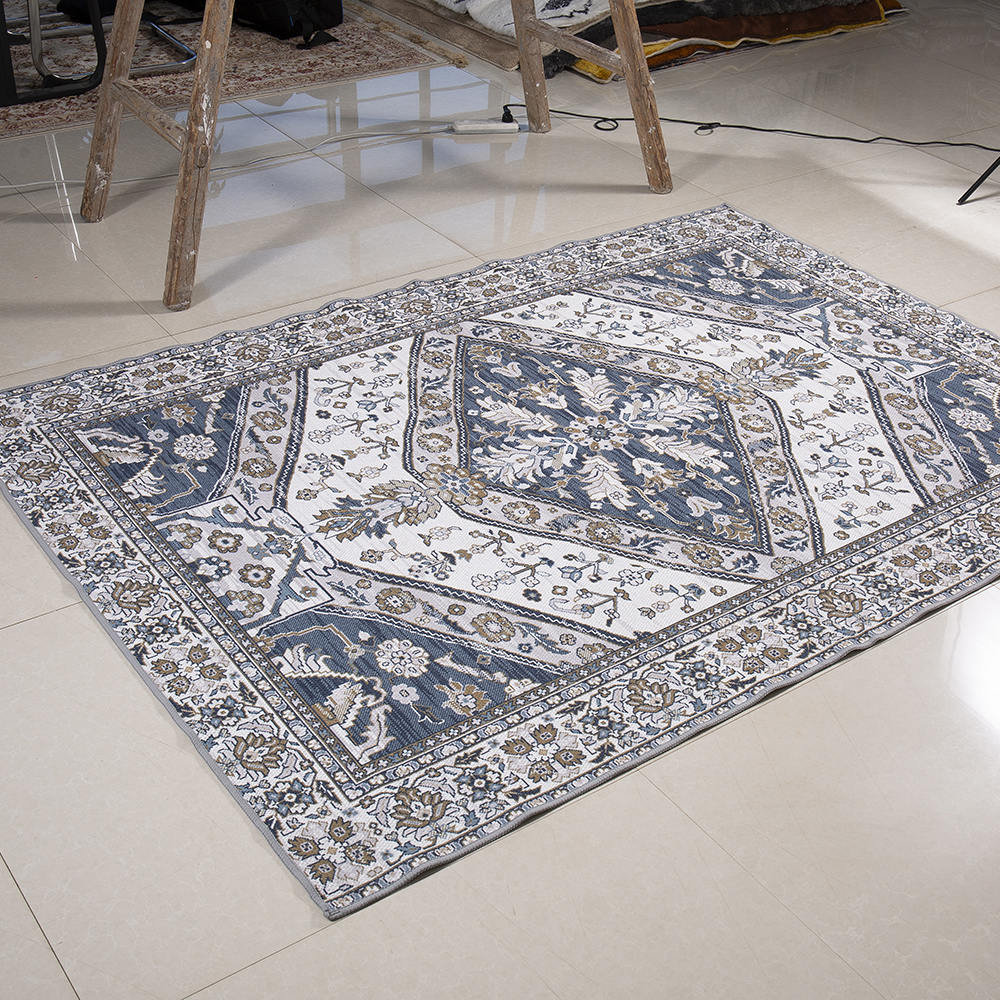
How a rectangular area carpet is made — its construction method — affects its texture, durability, price, and design possibilities just as much as the material it's made from. Understanding the main construction types helps you interpret product listings and evaluate quality claims accurately.
Hand-knotted carpets are the pinnacle of rug craftsmanship. Each individual knot is tied by hand around the warp threads, a process that can take months or years for a large, finely detailed piece. The knot density — measured in knots per square inch (KPSI) — determines the carpet's detail resolution and value, with fine pieces achieving 200–400+ KPSI. Hand-knotted rectangular area carpets are extremely durable (a quality piece can last 100 years or more with proper care), improve in appearance with age and use, and are the most valuable investment in the rug category. They're also the most expensive, with large pieces ranging from several hundred to tens of thousands of dollars. They suit formal living rooms, dining rooms, and master bedrooms where they'll be appreciated and well-cared for.
Hand-tufted carpets are made by pushing yarn loops through a canvas backing using a tufting gun, then securing the loops with a latex adhesive backing. The process is significantly faster than hand-knotting, producing carpets that look comparable to hand-knotted pieces at a much lower price point. However, hand-tufted carpets are less durable — the latex backing can deteriorate over time, causing shedding and structural breakdown, particularly in high-traffic areas. A quality hand-tufted rectangular area carpet will last 10–20 years with proper care. They're a good mid-range option for living rooms and bedrooms where appearance quality matters but the budget doesn't extend to hand-knotted work.
Machine-made rectangular area carpets are produced on power looms that replicate the look of hand-woven or hand-tufted designs at a fraction of the cost and with highly consistent quality control. Modern machine-made carpets in wool, polypropylene, nylon, and polyester can be visually indistinguishable from handmade alternatives in photos, and many deliver genuinely good performance and durability in residential settings. They're the dominant format for mid-range and budget rectangular area carpets and offer the widest selection of sizes, colors, and patterns at accessible price points. For family rooms, rentals, children's spaces, and any application where value for money outweighs artisan provenance, a quality machine-made rectangular carpet is an entirely sensible choice.
Flatweave carpets — including kilims, dhurries, and modern cotton flatweaves — have no pile. The pattern is created entirely by the weave structure, with colored weft threads interlacing with warp threads to produce geometric and abstract designs. Flatweave rectangular area carpets are thin, lightweight, reversible (doubling their lifespan), and very easy to clean. Their low profile makes them ideal for kitchen use, dining rooms, home offices with rolling chairs, and entryways where a thick pile would create a tripping hazard at doorway thresholds. They're also among the most affordable construction types, making them a practical starting point for larger spaces where budget is a constraint.
The rectangular area carpet is available in virtually every design aesthetic imaginable, which is both its strength and the source of choice paralysis for many shoppers. Here's a guide to the most popular style categories and the interiors they suit best:
Pile height — the length of the carpet fibers, measured in inches or millimeters — significantly affects how a rectangular area carpet looks, feels, and performs in daily use. It's a specification that many buyers overlook until they receive the carpet and discover it's either too flat or too plush for the intended application.
Shopping for a rectangular area carpet — whether in a showroom or online — involves a series of decisions that are easy to get wrong without a clear framework. These practical guidelines help you navigate the process confidently and avoid the most common and costly mistakes:
A quality rectangular area carpet is a significant investment, and proper care is what determines whether it lasts 5 years or 50. The right maintenance routine depends on the material and construction, but these foundational practices apply broadly:

ADD: No.75 Zhenyuan Road, Yuecheng District, Shaoxing City, Zhejiang Province, China 312000

Tel : +86-189 6750 9795

FAX : +86-0575-8803 2773

Email : fisher@benetextile.com

Copyright © Zhejiang Benyi Textile Technology Co., Ltd. All Rights Reserved. Carpets and Rugs Manufacturer

 English
 Français
 Deutsch
 عربى
عربى