

Industry News
 2026.03.24
 Industry News
Oval area rugs occupy a unique position in the world of floor coverings. They combine the directional utility of a rectangle — making them easy to align with furniture, beds, and dining tables — with the soft, curved perimeter of a rounded shape that immediately takes the hard edge off any room. Where a rectangular rug can feel structured and formal, and a round rug can sometimes feel too contained and static, an oval area rug delivers a sense of graceful flow that works across a surprisingly wide range of interior styles, from traditional farmhouse and country to transitional and even certain modern aesthetics.
The oval format also has a rich decorating history. Braided oval area rugs have been a staple of American folk interiors for generations, hand-hooked oval rugs with floral motifs were popular in Victorian parlors and Edwardian drawing rooms, and the shape continues to appear prominently in traditional, heritage, and cottage-inspired interiors today. Understanding what makes the oval area rug special — and where it performs best — helps you shop with purpose rather than landing on one by default when the rectangular size you wanted wasn't available.
Content
Before falling in love with a design, it's important to understand what oval area rug sizes are actually available from most retailers. Unlike rectangular rugs, which come in a very wide range of standardized dimensions, oval area rugs are typically available in fewer size increments. Planning around available sizes prevents you from ordering something that requires costly custom work to fit your space.
|
Size |
Dimensions |
Recommended Room Use |
Furniture Pairing |
|
Extra Small |
2×3 ft |
Bathroom, entryway accent |
Pedestal sink, vanity |
|
Small |
3×5 ft |
Entryway, small bath, nursery accent |
Entry bench, bassinet area |
|
Medium |
4×6 ft / 5×8 ft |
Breakfast nook, small bedroom, office |
Twin/full bed foot, small dining table |
|
Large |
6×9 ft / 7×10 ft |
Master bedroom, dining room, living room |
Queen bed, 4–6 seat dining table |
|
Extra Large |
8×10 ft / 8×11 ft |
Large bedroom, open dining room |
King bed, 6–8 seat dining table |
|
Oversized |
9×12 ft and up |
Grand bedroom, formal dining, large living room |
King bed with full frame, 8–10 seat table |
|
Oval Runner |
2×6 ft / 2.5×8 ft / 3×10 ft |
Hallway, galley kitchen, beside bed |
Beside twin or queen bed, console table |
One practical tip: always verify the exact listed dimensions before ordering, not just the size label. Manufacturing tolerances mean an "8×10" oval area rug might actually measure 7'10" × 9'10". If you're working with tight clearances — for example, ensuring a dining room rug doesn't overlap a nearby doorway — those 2–4 inches matter. Check the product detail dimensions carefully, and when in doubt, use painter's tape on the floor to preview the actual footprint before purchasing.
Oval area rugs aren't equally suited to every room or every furniture arrangement. They perform strongest in spaces where their directional shape can align naturally with furniture, and where the curved perimeter adds visual softness without creating an awkward contrast with the surrounding geometry. Here's a room-by-room breakdown of where oval area rugs work best and the specific placement principles that make them look intentional.
The bedroom is the single strongest application for oval area rugs. A large oval rug oriented with its long axis running parallel to the length of the bed — centered on the bed's width — creates a graceful visual frame that anchors the sleeping area without the abrupt squared-off corners of a rectangle. For a queen bed, a 6×9 ft or 7×10 ft oval area rug works well; for a king bed, step up to 8×10 ft or 8×11 ft. The rug should extend at least 18–24 inches beyond each side of the bed so there's meaningful soft coverage underfoot when getting in and out of bed from either side.
In smaller bedrooms where a full-length rug under the entire bed isn't practical, placing a medium oval area rug (5×8 ft for a queen, 6×9 ft for a king) at the foot of the bed — extending under the lower third of the frame and out into the room — still delivers the warmth and visual grounding that defines a well-styled bedroom. The oval's curved ends follow the natural arc of movement around the foot of the bed, making this placement feel intuitive and polished.
An oval area rug under an oval or round dining table is one of the most harmonious rug placements possible — the shapes echo each other perfectly, creating immediate visual cohesion. The critical sizing rule that applies to all dining room rugs applies here too: the rug must extend at least 24 inches, and ideally 30 inches, beyond the table's edge on all sides so that dining chair legs remain fully on the rug even when chairs are pulled out. A chair whose back legs slip off the rug edge every time someone stands up creates friction, shifts the rug, and looks visually clumsy.
For a standard 42×60 inch oval dining table, a 8×10 ft oval area rug provides comfortable clearance. For larger tables seating 8–10 guests, a 9×12 ft oval is the appropriate choice. Even with a rectangular dining table, an oval area rug can work beautifully if the room has curved architectural elements — arched doorways, barrel-vaulted ceilings — or rounded furniture pieces that give the oval rug a visual context to belong to.
Using an oval area rug in the living room requires more deliberate styling than in the bedroom or dining room, because most living room furniture arrangements are rectangular and linear. The oval works best in a living room when there's at least some curvature in the furniture or architecture to echo — a curved sofa, rounded armchairs, a circular or oval coffee table, arched windows, or a semi-circular conversation grouping. In these contexts, the large oval area rug anchors the seating zone while reinforcing the room's softer, more organic aesthetic identity.
For the most effective living room placement, choose an oval area rug large enough that the front legs of your sofa and main chairs rest on the rug — at minimum, front legs on, back legs off. An 8×10 ft oval area rug typically works for a standard sofa-and-two-chairs arrangement using the front-legs-on method. For an all-legs-on arrangement, a 9×12 ft oval is usually necessary for a full-sized living room grouping.
Oval area rugs have been used in entryways and hallways for centuries — the shape's gentle ends look naturally finished in these transitional spaces in a way that rectangular runners with blunt cut ends sometimes don't. In a foyer, a 3×5 ft or 4×6 ft oval area rug centered in the entry space creates a welcoming focal point, with 12–18 inches of bare floor visible around all sides of the rug. In a hallway, an oval runner should span most of the corridor's length with about 6 inches of floor visible at each end, and 4–6 inches of bare floor on each side.
Oval area rugs span an enormous range of design styles, from antique-inspired floral medallions to clean contemporary geometrics. Here are the most popular style categories and the interiors they suit best:
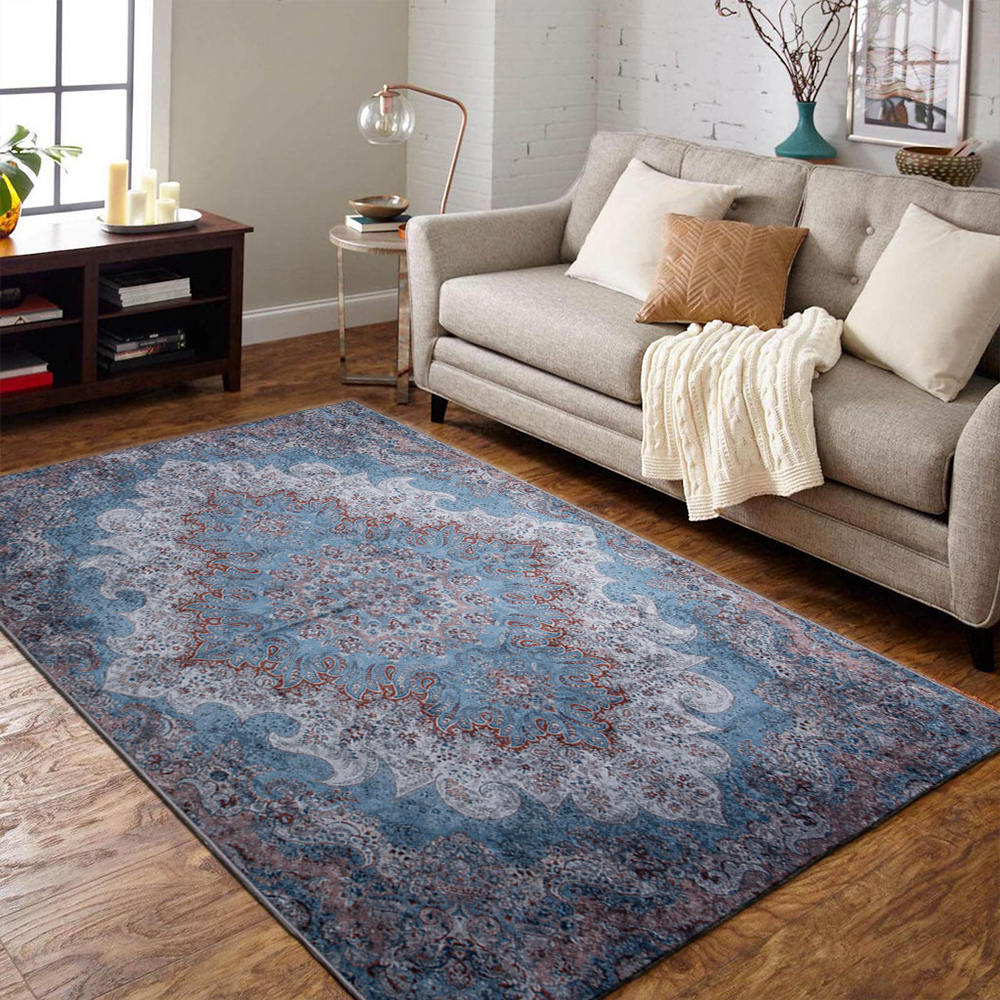
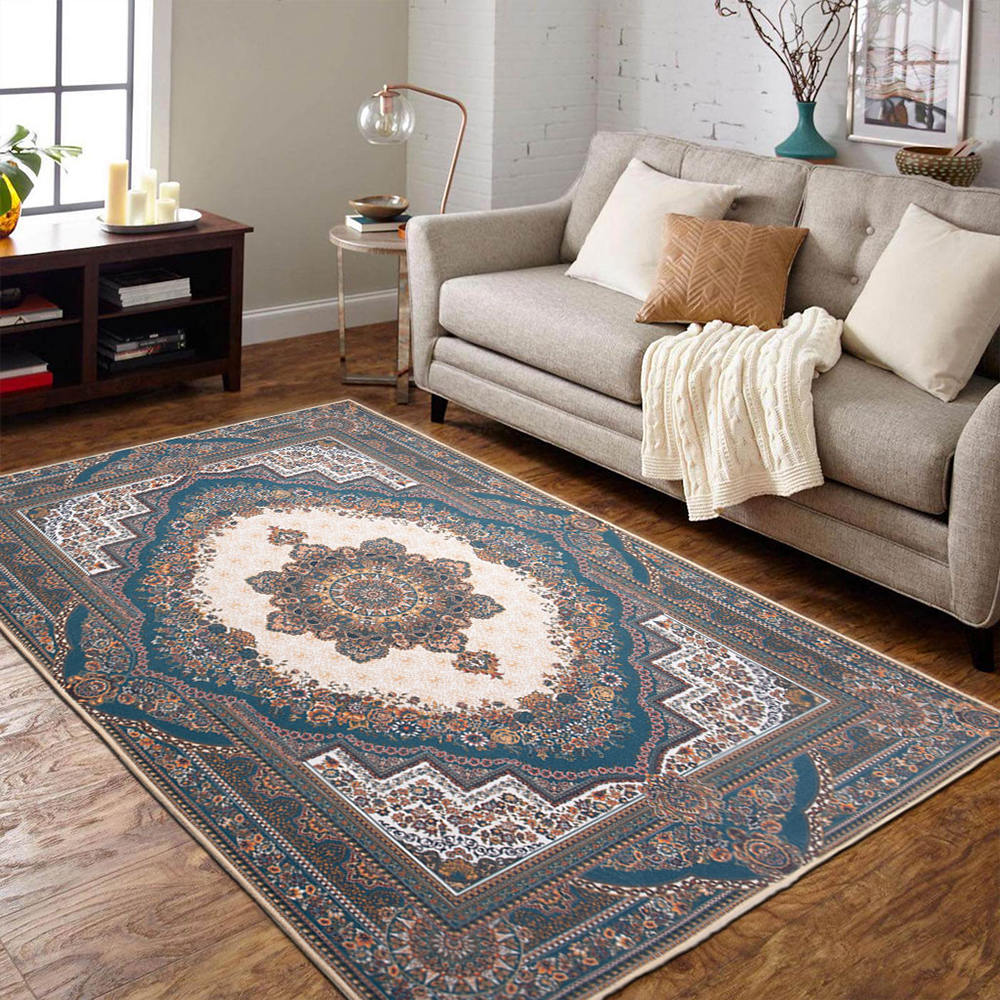
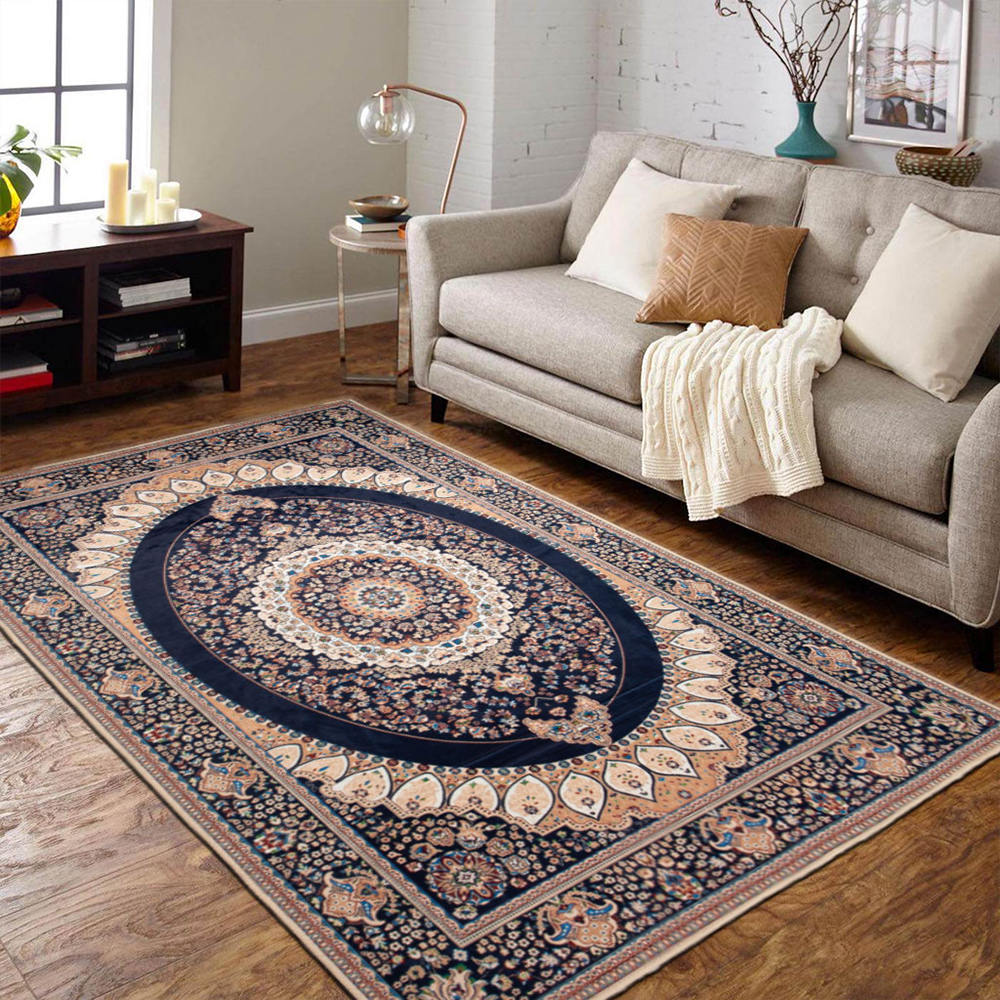
Traditional oval area rugs — featuring floral medallions, Persian-inspired patterns, botanical motifs, or folk art designs — are among the most widely available and most purchased oval rugs on the market. These designs draw from a long decorative history and feel at home in traditional, colonial, Victorian, and eclectic interiors. Vintage oval area rugs, particularly those with distressed or overdyed finishes that soften the original colors into muted, aged tones, have seen strong growth in popularity alongside the broader vintage and antique-inspired interior trend. A vintage-washed oval area rug in faded rose, dusty blue, or soft ivory can anchor a traditional bedroom or dining room with quiet elegance.
Braided oval area rugs are perhaps the most historically American rug format — a tradition rooted in colonial-era households where fabric scraps were braided into ropes and coiled into oval floor coverings that were both practical and beautiful. Modern braided oval area rugs continue this tradition, typically constructed from wool, cotton, polypropylene, or fabric blends, with the coiling process naturally producing the oval shape. They bring warmth, texture, and a handcrafted character that suits farmhouse, country, coastal cottage, and heritage-inspired interiors particularly well. Many braided oval area rugs are reversible, extending their useful life considerably.
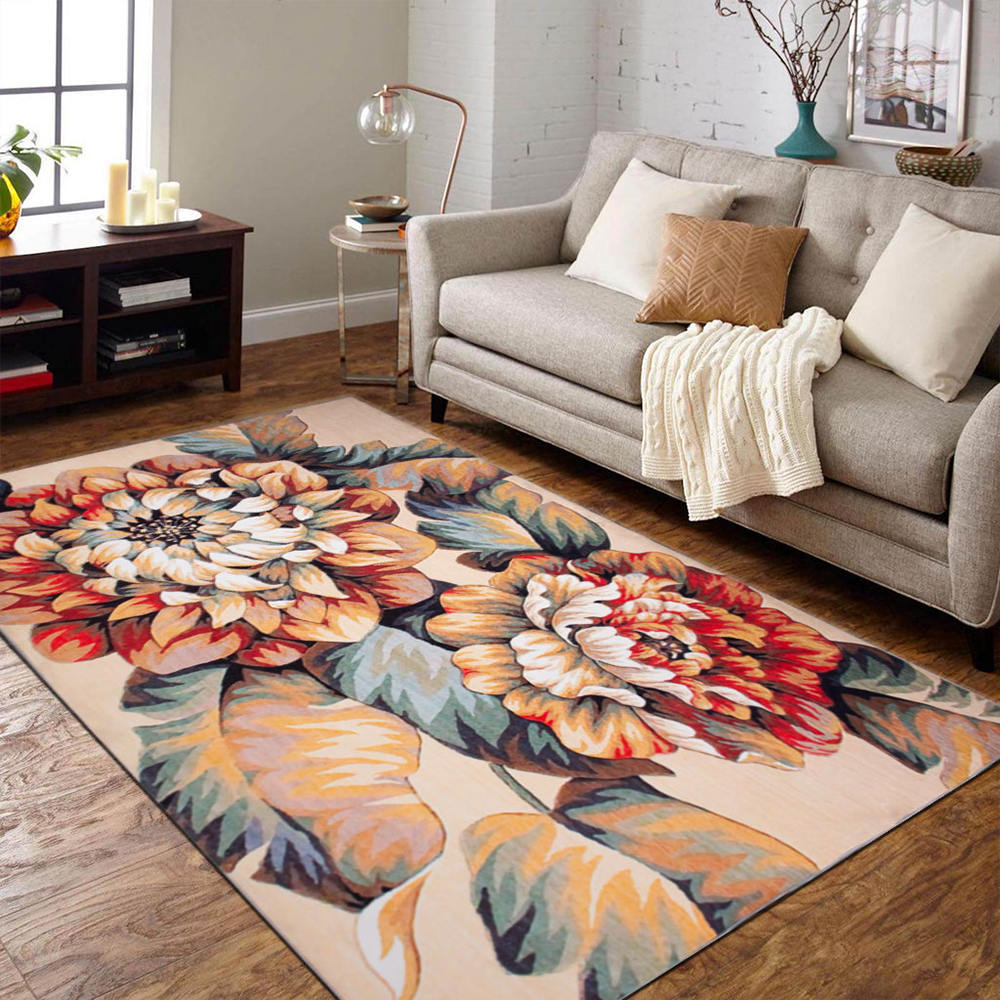
Floral designs — from large-scale painterly blooms to delicate all-over botanical repeats — are among the most natural patterns for the oval format. The organic curves of flowers and leaves echo the oval's curved perimeter, creating a design where the pattern and the shape feel like they were made for each other. Floral oval area rugs in muted, sophisticated colorways (dusty sage, terracotta, cream, navy) are particularly popular in bedroom and dining room applications. Brighter, more graphic floral ovals work well in sunrooms, breakfast nooks, and children's rooms where a playful, fresh energy is appropriate.
Solid-color oval area rugs offer the shape's spatial benefits without the visual complexity of a pattern — a compelling choice when the rug's primary job is to add softness and warmth rather than visual interest. A solid sage green, dusty rose, warm ivory, or deep charcoal oval area rug in a plush wool or high-pile material can feel simultaneously simple and luxurious. These work particularly well in modern-transitional interiors where the shape provides a subtle softening effect without introducing pattern that might compete with other design elements in the room.
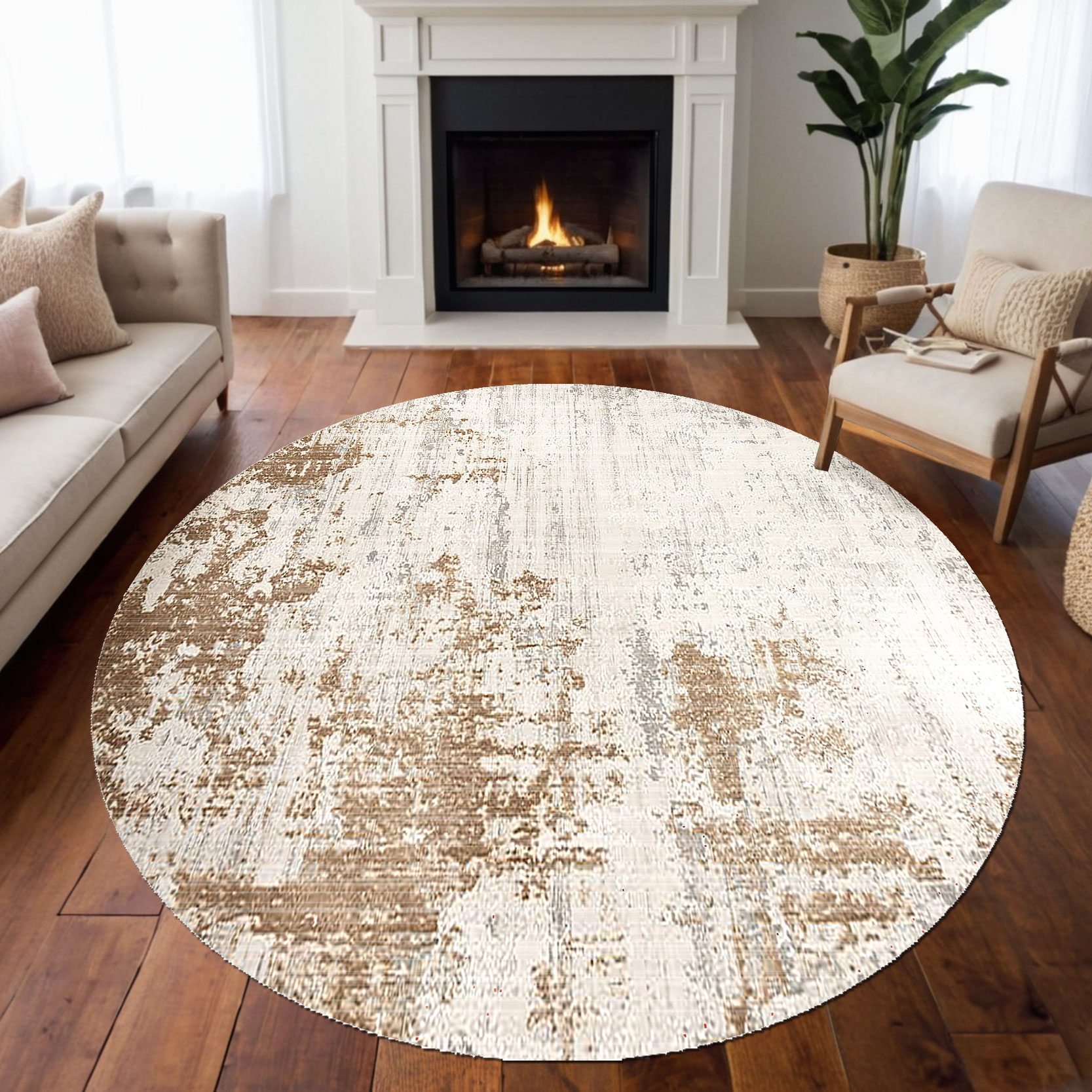
Material choice determines how an oval area rug feels underfoot, how well it holds up to traffic and daily use, how easy it is to clean, and how long it will last. Here's a practical comparison of the most common oval area rug materials:
|
Material |
Feel & Texture |
Durability |
Best Rooms |
Care Level |
|
Wool |
Soft, warm, resilient |
Excellent |
Bedroom, living room, dining room |
Moderate (dry clean or spot clean) |
|
Cotton |
Soft, casual, flat |
Good |
Kitchen, bath, kids' room |
Easy (machine washable) |
|
Polypropylene |
Soft, stain-resistant |
Very Good |
Any room, indoor/outdoor |
Easy (hose off or spot clean) |
|
Jute / Sisal |
Textured, natural, firm |
Good |
Living room, hallway, study |
Moderate (avoid moisture) |
|
Viscose / Silk Blend |
Silky, lustrous, delicate |
Fair |
Formal living room, bedroom |
High (professional cleaning only) |
|
Recycled / Braided Blend |
Chunky, textured, homespun |
Very Good |
Farmhouse, kitchen, entryway |
Easy (often reversible) |
The biggest styling risk with oval area rugs — especially in rooms where rectangular rugs are the default — is that the shape looks accidental rather than deliberate. These principles help ensure your oval area rug reads as a confident, designed choice:
Buying an oval area rug online offers the widest selection and often the best prices, but it also means you can't feel the pile, see the colors in your lighting, or gauge the scale in person before committing. These strategies reduce the risk of disappointment:
With the right care routine, a quality oval area rug should last decades. The maintenance requirements vary by material, but these practices apply broadly across most oval area rug types:

ADD: No.75 Zhenyuan Road, Yuecheng District, Shaoxing City, Zhejiang Province, China 312000

Tel : +86-189 6750 9795

FAX : +86-0575-8803 2773

Email : fisher@benetextile.com

Copyright © Zhejiang Benyi Textile Technology Co., Ltd. All Rights Reserved. Carpets and Rugs Manufacturer

 English
 Français
 Deutsch
 عربى
عربى