

Industry News
 Home / News / Industry News / The Complete Guide to Living Room Rugs: Style, Function, and Selection
  2026.08.11
 Industry News
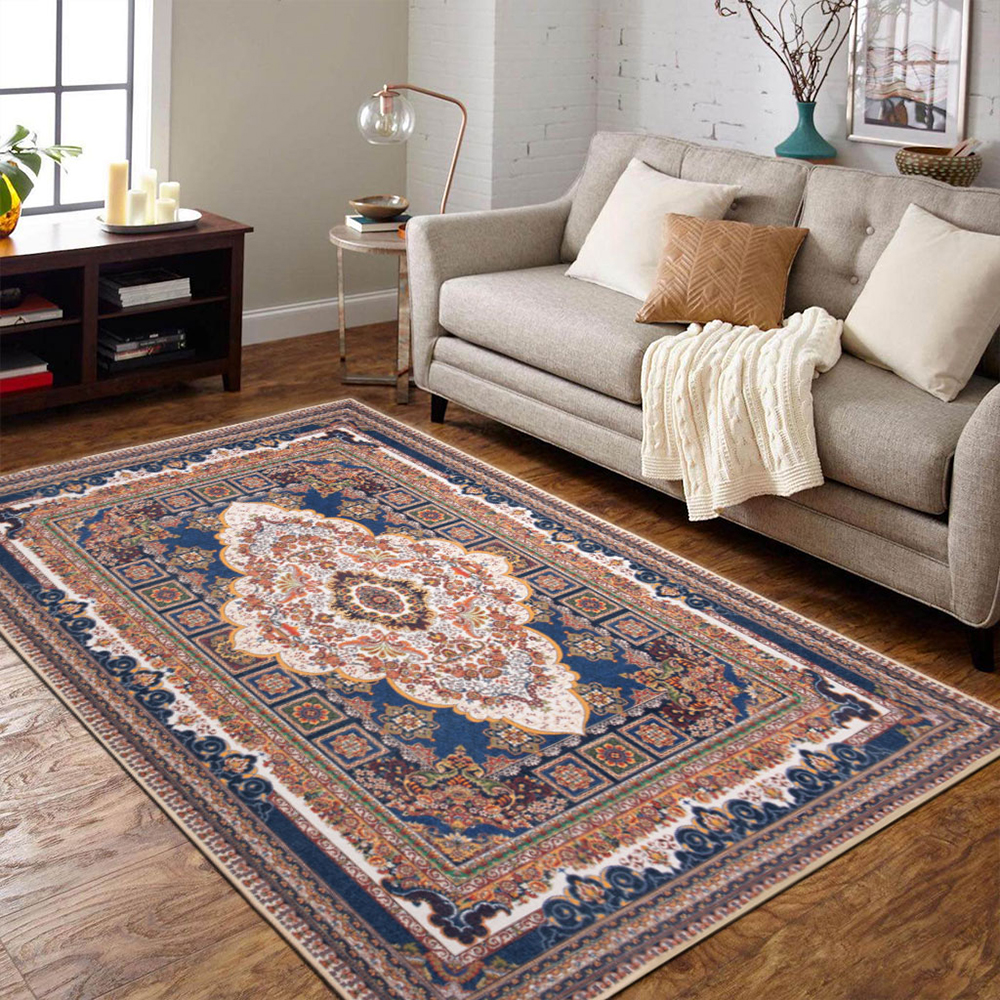
A living room rug is far more than a decorative afterthought. It is the foundation upon which the entire room's design is built — anchoring furniture arrangements, defining zones within open floor plans, introducing color and texture, and delivering everyday comfort underfoot. Choosing the right rug involves balancing aesthetics with practical considerations like material, size, pile height, and maintenance. This guide explores everything you need to know to select a living room rug that performs beautifully for years to come.
Content
The living room is typically the most-used communal space in a home, hosting everything from family movie nights to formal entertaining. A well-chosen rug contributes to this space in several key ways:
Material choice significantly affects a rug's durability, feel, price point, and maintenance requirements.
Wool remains the gold standard for living room rugs. It is naturally resilient, resists crushing and matting, and has an inherent ability to repel stains due to its lanolin content. Wool rugs also offer excellent insulation and a soft, luxurious hand-feel. The primary tradeoffs are higher cost and the need for professional cleaning for deep stains.
Synthetic rugs have advanced considerably in quality and appearance. Nylon offers strong durability and stain resistance at a moderate price point, making it popular for high-traffic households. Polypropylene (often labeled "olefin") is valued for its resistance to moisture and fading, making it a common choice for rugs that see sunlight exposure. Polyester delivers a soft texture and vibrant color retention, often at a lower price than wool.
These plant-based fibers bring an organic, textural quality favored in coastal, bohemian, and minimalist interiors. They are highly durable and eco-friendly but can feel coarse underfoot and are less forgiving of spills, as they absorb liquid rather than repel it.
Cotton rugs are lightweight, affordable, and typically flat-woven, making them well-suited for casual, layered looks. They are easy to clean but generally less durable under heavy foot traffic than wool or synthetic alternatives.
Prized for their luminous sheen and fine detail, silk rugs are typically reserved for lower-traffic accent areas rather than primary living room placement, given their delicate nature and higher price point.
The way a rug is made affects its texture, durability, and price:
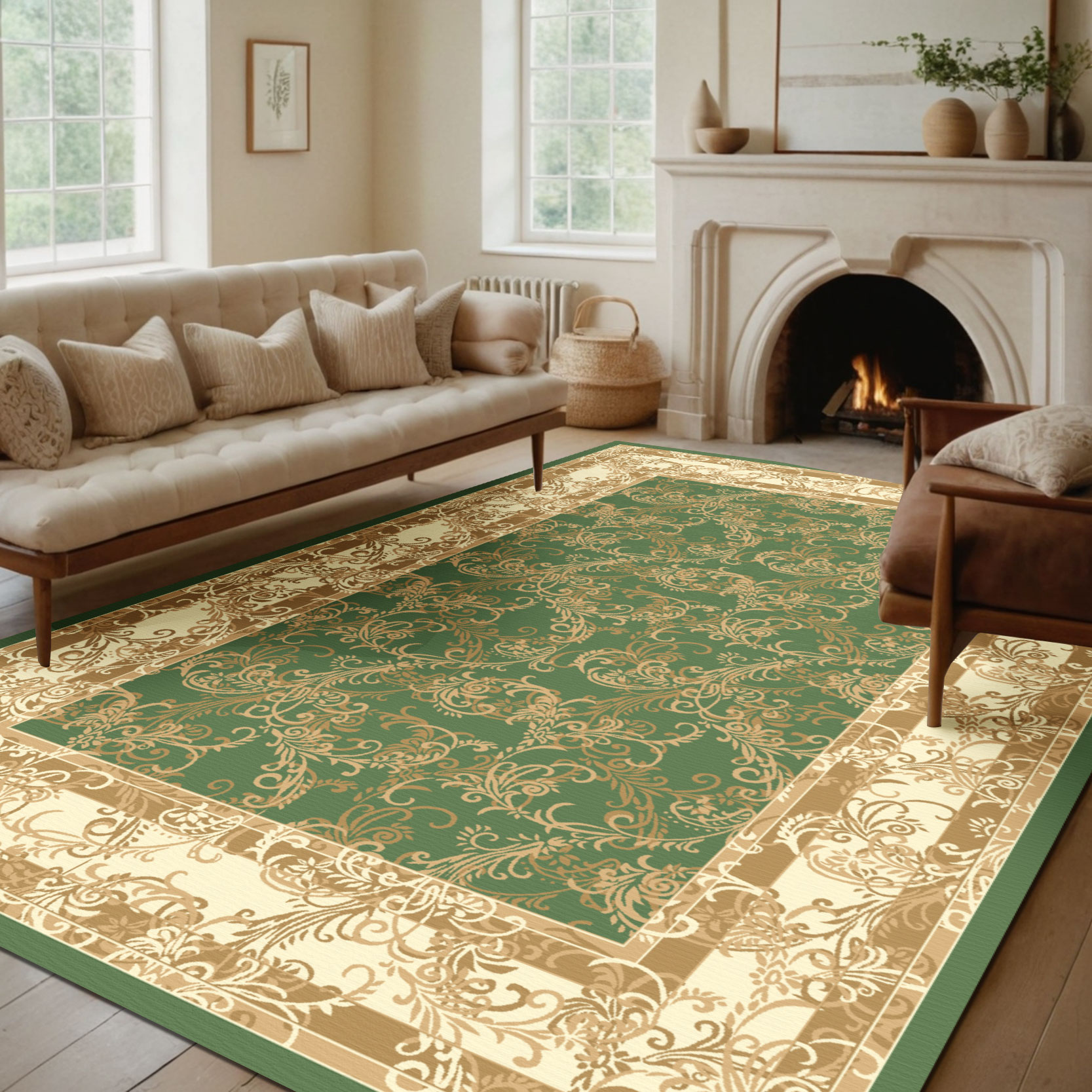
Sizing is one of the most common mistakes in rug selection. An undersized rug can make a living room feel disjointed, while an oversized rug can overwhelm the space. General guidelines include:
As a reference point, common living room rug sizes include 5x8 feet for smaller or secondary spaces, 8x10 feet for standard living rooms, and 9x12 feet or larger for expansive or open-concept layouts.
Neutral tones (beige, gray, ivory) offer versatility and longevity, adapting easily to changing decor over time. Bolder colors can serve as a room's focal point but should be balanced with more neutral furniture and wall colors to avoid visual overload.
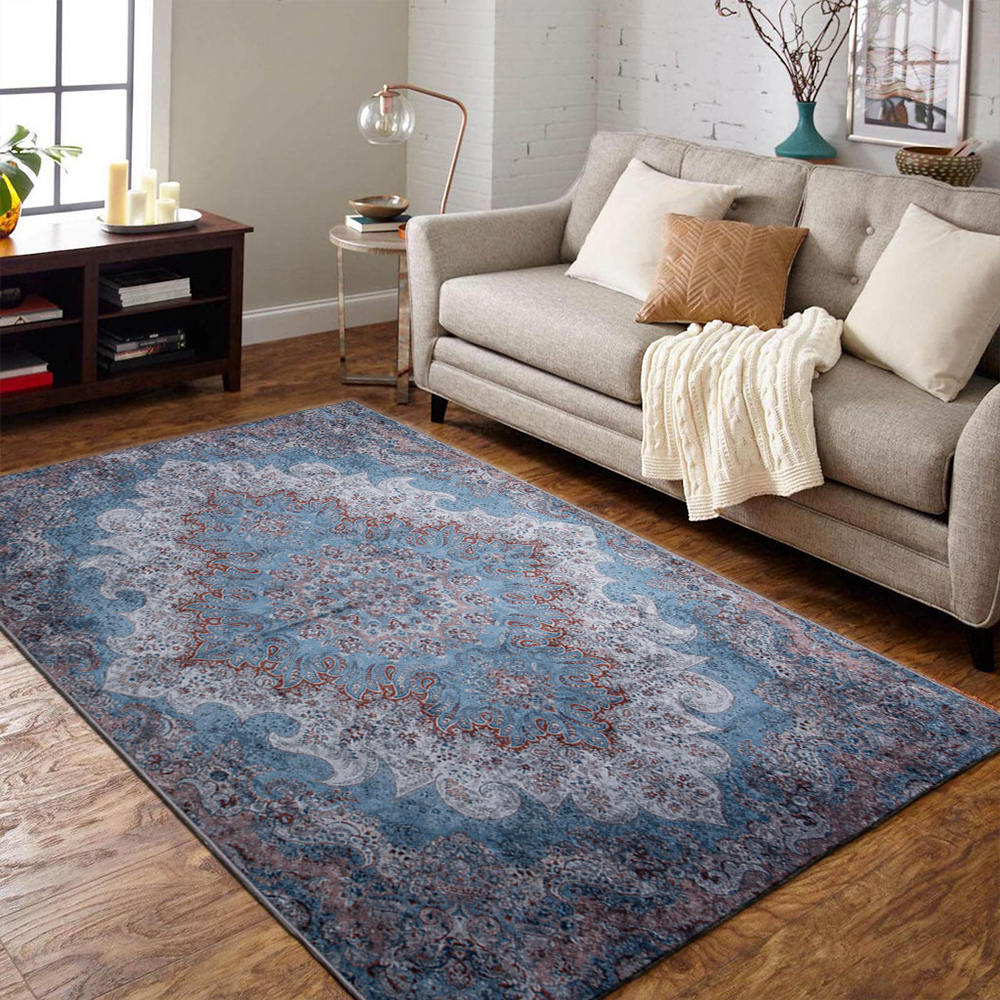
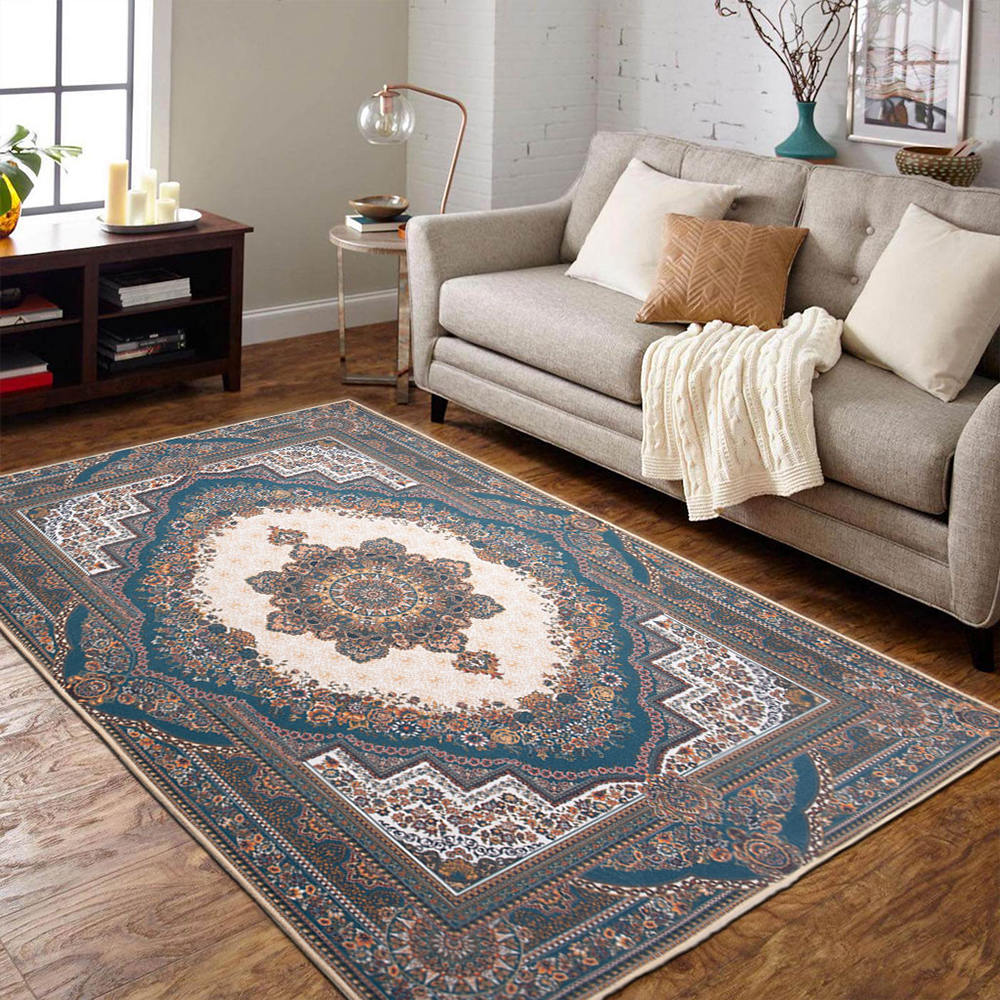
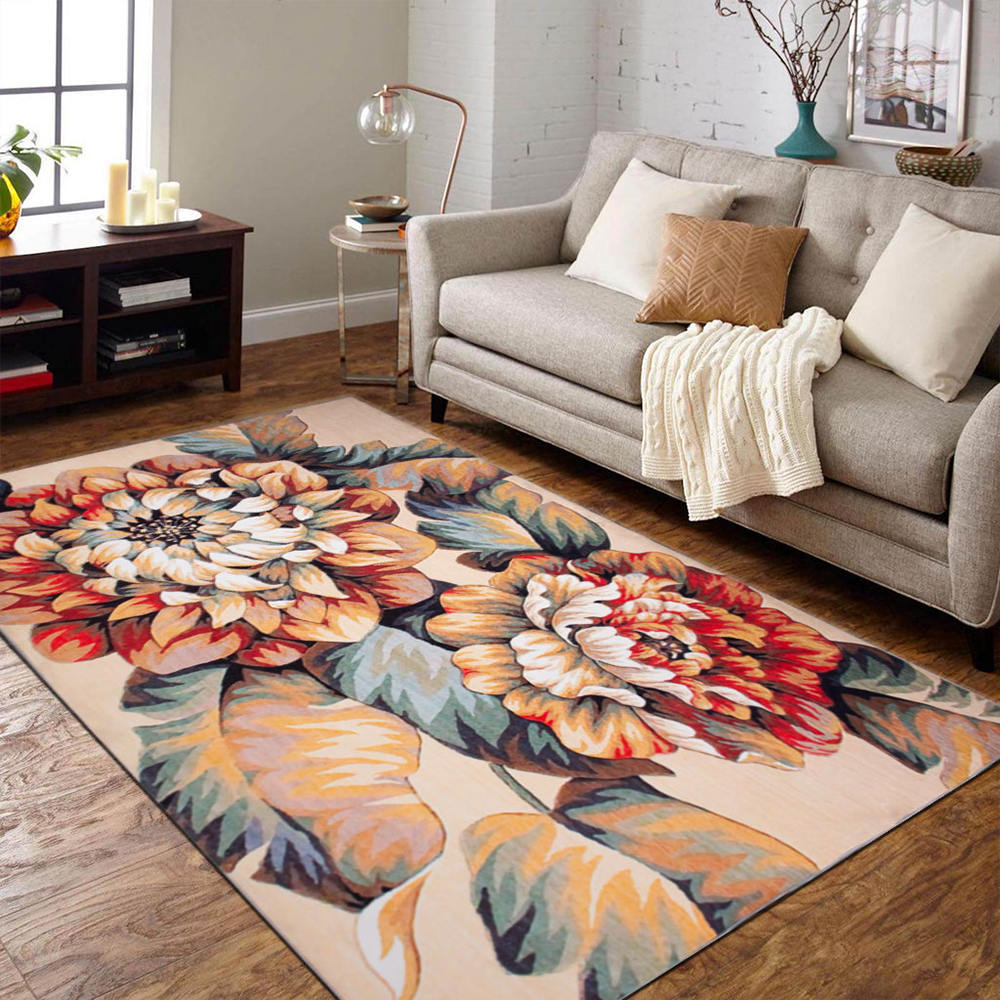
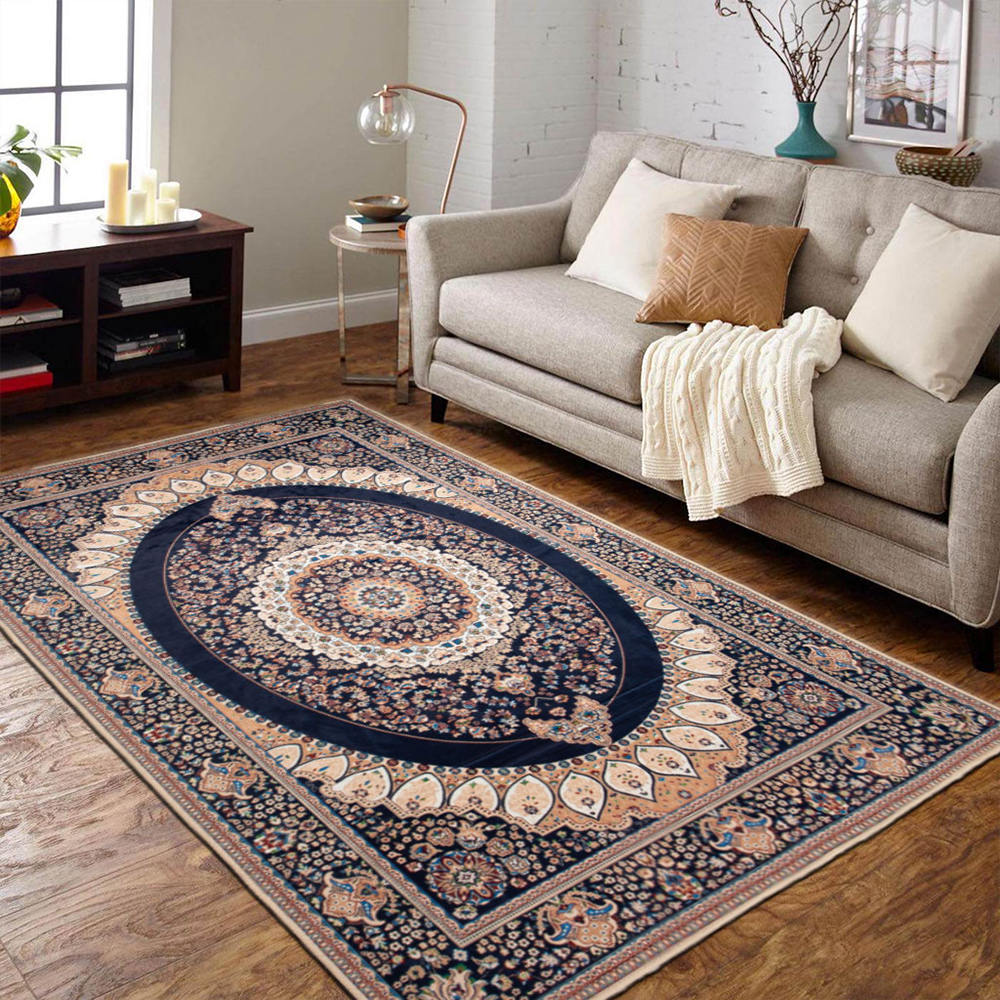
Patterned rugs are excellent at concealing everyday wear, dirt, and pet hair, making them practical for busy households. Geometric patterns suit modern and transitional interiors, while traditional motifs like medallions and florals complement classic or eclectic spaces. Solid or subtly textured rugs work well in rooms that already feature bold furniture, artwork, or wallpaper.
Low-pile rugs are easier to clean, work well under furniture, and suit high-traffic areas or homes with allergies. High-pile or shag rugs deliver a plush, cozy feel underfoot but require more maintenance and can be trickier for furniture placement and vacuuming.
Selecting a living room rug is a decision that merges practicality with personal style. By carefully considering material, construction, size, and maintenance needs alongside color and pattern preferences, homeowners can choose a rug that not only elevates the room's design but also stands up to daily life. A thoughtfully chosen rug becomes a lasting centerpiece — one that grounds the room's furniture, softens its acoustics, and welcomes family and guests alike with warmth and comfort underfoot.

ADD: No.75 Zhenyuan Road, Yuecheng District, Shaoxing City, Zhejiang Province, China 312000

Tel : +86-189 6750 9795

FAX : +86-0575-8803 2773

Email : fisher@benetextile.com

Copyright © Zhejiang Benyi Textile Technology Co., Ltd. All Rights Reserved. Carpets and Rugs Manufacturer

 English
 Français
 Deutsch
 عربى
عربى