

Industry News
 Home / News / Industry News / The Complete Guide to Carpets and Rugs: How to Choose, Size, and Care for Every Room
  2026.06.01
 Industry News
Content
Whether you're furnishing a new place or refreshing an old one, carpets and rugs remain one of the smartest investments you can make for your home. They add warmth, reduce noise, protect your floors, and tie a room together in ways that hard flooring simply can't. But with so many types, materials, and styles available, it can be overwhelming to know where to start. This guide breaks it all down in plain language so you can make a confident choice.
People often use these terms interchangeably, but there's a practical difference worth knowing before you shop.
Wall-to-wall carpet is installed directly onto the floor and covers an entire room. It's fixed in place, typically requires professional installation, and is a more permanent flooring solution. It's a popular choice for bedrooms, living rooms, and stairs.
Area rugs, on the other hand, are freestanding textile pieces placed over existing flooring. They come in a wide range of sizes — from small accent rugs to large room-sized floor rugs — and can be moved, swapped out, or taken with you when you move. They're incredibly versatile and work on hardwood, tile, laminate, and even over carpet.
The material of your rug or carpet affects everything: how it feels underfoot, how long it lasts, how easy it is to clean, and how much it costs. Here's a quick breakdown:
| Material | Best For | Durability | Maintenance |
| Wool | Living rooms, bedrooms | High | Moderate |
| Nylon | High-traffic areas | Very High | Easy |
| Polypropylene (Olefin) | Outdoors, basements | High | Very Easy |
| Cotton | Kitchens, casual spaces | Low–Moderate | Easy (machine washable) |
| Jute / Sisal | Boho, natural decor styles | Moderate | Difficult (absorbs moisture) |
| Viscose / Silk | Low-traffic, decorative use | Low | Difficult |
For most households with kids or pets, nylon or wool rugs offer the best balance of comfort and practicality. If you're decorating a low-traffic guest room or study, natural fiber rugs like jute or sisal can add a beautiful textural element without worrying too much about wear.
Getting the size wrong is the single most common rug mistake people make. A rug that's too small makes a room look disconnected and awkward. Here are the basic sizing rules for each space:
All main furniture legs should either sit fully on the rug or at least have their front two legs on it. A common rule of thumb: leave 18 inches of bare floor between the rug edge and the wall. For most living rooms, a 8'x10' or 9'x12' rug works well.
Place the rug under the lower two-thirds of the bed so it extends at least 18–24 inches on each side and at the foot of the bed. This way, when you step out of bed, your feet land on something soft. A 5'x8' works for a queen; go with 8'x10' or larger for a king.
The rug should be large enough so that dining chairs stay on it even when pulled out from the table. Add at least 24 inches beyond each side of the table. A 9'x12' is typically the minimum for a standard dining set.
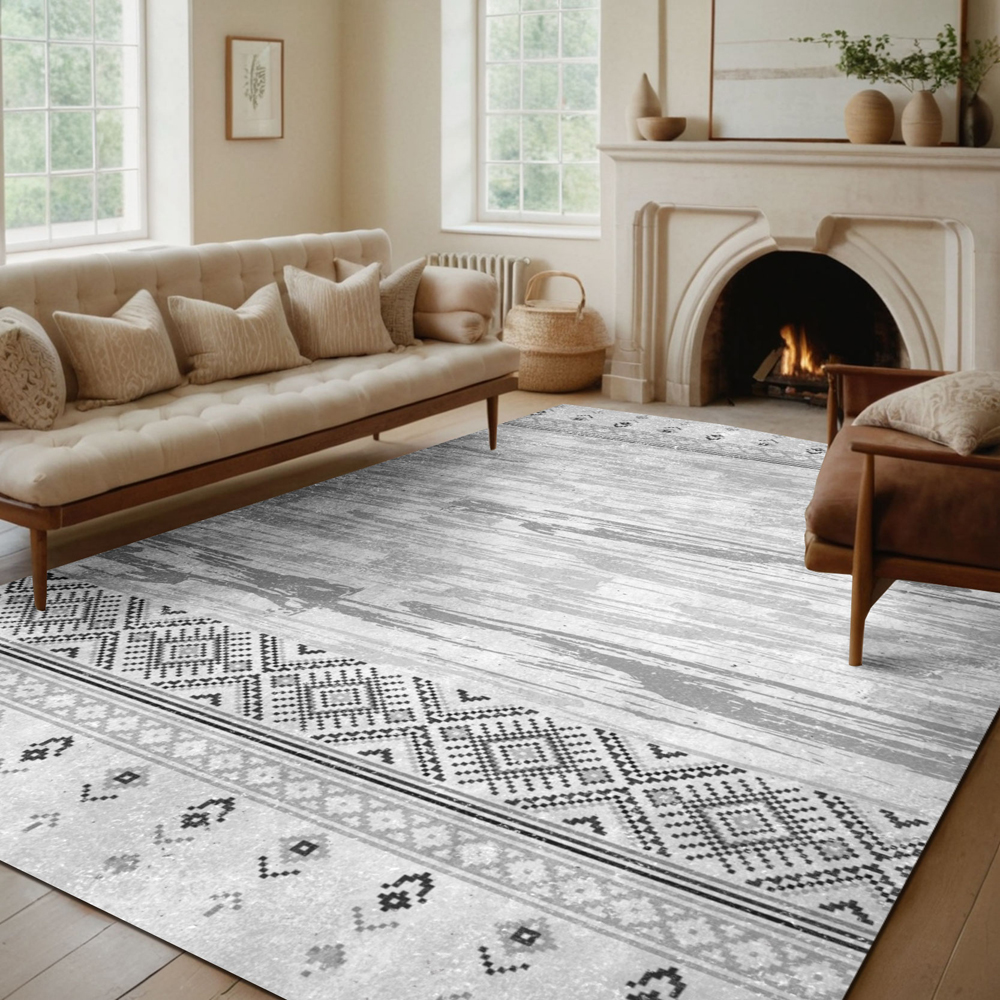
Beyond material, the weave and design style dramatically affect the look and feel of a rug. Here are the most popular types you'll encounter:
No matter how much you spend on a rug or carpet, proper maintenance is what keeps it looking great for years. Here's what actually makes a difference:
Not all rugs are created equal when it comes to specific household challenges. If allergies are a concern, opt for low-pile synthetic rugs that trap fewer allergens and are easy to clean. Wool, while natural, can harbor dust mites if not cleaned frequently. Look for rugs labeled as hypoallergenic or treated for allergen resistance.
For pet owners, the best floor rugs are those made from nylon or polypropylene — both are resistant to stains and moisture. Avoid natural fiber rugs like jute or sisal if you have animals, as pet accidents can permanently damage them and cause mold issues underneath.
For outdoor use, always choose rugs specifically designed for exterior conditions. Outdoor rugs are typically made from UV-resistant polypropylene, which resists fading, mildew, and moisture. They're easy to hose down and dry quickly — perfect for patios, decks, or entryways.
Choosing the right carpets and rugs doesn't have to be complicated. Once you know the basics — material, size, pile type, and how to care for them — you'll be able to shop with confidence and avoid the most common mistakes. Whether you're layering decorative rugs over hardwood floors or installing wall-to-wall carpet throughout a bedroom, the right choice will make your space feel more finished, comfortable, and personal. Invest a little time in the research upfront, and your rugs will reward you with years of beauty and function.

ADD: No.75 Zhenyuan Road, Yuecheng District, Shaoxing City, Zhejiang Province, China 312000

Tel : +86-189 6750 9795

FAX : +86-0575-8803 2773

Email : fisher@benetextile.com

Copyright © Zhejiang Benyi Textile Technology Co., Ltd. All Rights Reserved. Carpets and Rugs Manufacturer

 English
 Français
 Deutsch
 عربى
عربى