

Industry News
 Home / News / Industry News / Printed Rugs: How to Choose the Right One and Make It Work in Your Space
  2026.06.16
 Industry News
A printed rug can completely transform a room — adding color, personality, and visual depth in a way that plain or solid rugs simply can't. Whether you're drawn to bold geometric prints, nature-inspired florals, abstract art-style patterns, or photo-realistic designs, there's a print rug out there for every taste and interior style. But not all printed rugs are made the same way, and understanding how they're produced, what they're made from, and how to style them will help you make a much smarter purchase. This guide covers everything you need to know.
Content
A printed rug is a rug where the design or pattern is applied to the surface of the fabric after the rug is manufactured, rather than being woven or tufted into the structure of the rug itself. This is an important distinction. In traditional woven or hand-knotted rugs, the pattern is formed by the arrangement of colored yarns during the weaving process — the design is literally built into the fabric. With a printed area rug, the base rug is made first, and then the design is transferred onto the pile surface using ink or dye.
The most common modern method is digital printing, where high-resolution inkjet technology applies designs directly onto the rug surface with extraordinary color accuracy and detail. This technology has made it possible to reproduce photographic images, complex gradients, and intricate artwork on rugs at an accessible price point. Flat-screen printing and rotary printing are older industrial techniques still used for high-volume production of simpler repeat patterns.
The result is that printed rugs offer a level of design freedom that woven rugs simply can't match — you can get virtually any design, color combination, or image printed onto a rug. The trade-off is that the print sits on top of the fibers rather than running all the way through, which affects how the color holds up over time if the rug is not well made.
Understanding the production process helps explain why quality varies so much between printed floor rugs at different price points. Here's how the digital printing process typically works:
Higher-quality digitally printed rugs use reactive dyes or acid dyes that chemically bond with the fiber rather than just coating the surface. These dyes penetrate deeper into the pile, resulting in richer colors and far better fade resistance. Cheaper printed rugs often use pigment-based inks that sit on top of the fiber and wear off more quickly.
The fiber content of the base rug plays a huge role in how the print looks, how durable it is, and how easy it is to maintain. Here's how the most common materials compare for printed rugs:
| Material | Print Quality | Durability | Best For |
| Nylon | Excellent | Very High | High-traffic areas, hallways |
| Polyester | Very Good | Moderate | Bedrooms, low-traffic living rooms |
| Polypropylene | Good | High | Outdoor, kitchens, basements |
| Cotton | Good | Low–Moderate | Casual spaces, kids' rooms |
| Wool | Excellent | High | Premium residential settings |
Nylon is the best all-around base material for a printed rug if you want vivid color that lasts. Its fiber structure accepts dye deeply and evenly, and the material itself withstands years of foot traffic. Polyester produces vibrant, glossy-looking prints but is more prone to matting in busy areas. Polypropylene is the smart choice for outdoor printed rugs or damp-prone spaces because it resists moisture and mildew — though the print may not be as sharp or rich as on nylon.
One of the biggest advantages of print rugs is the sheer range of visual styles available. Here's a breakdown of the most popular design categories and where they work best in a home:
Bold shapes, repeating patterns, and clean lines make geometric print rugs a natural fit for modern, Scandinavian, and mid-century interior styles. They work particularly well in living rooms and home offices where you want visual interest without overwhelming the space. Geometric prints with high contrast — black and white, navy and cream — tend to be the most versatile and easy to style around.
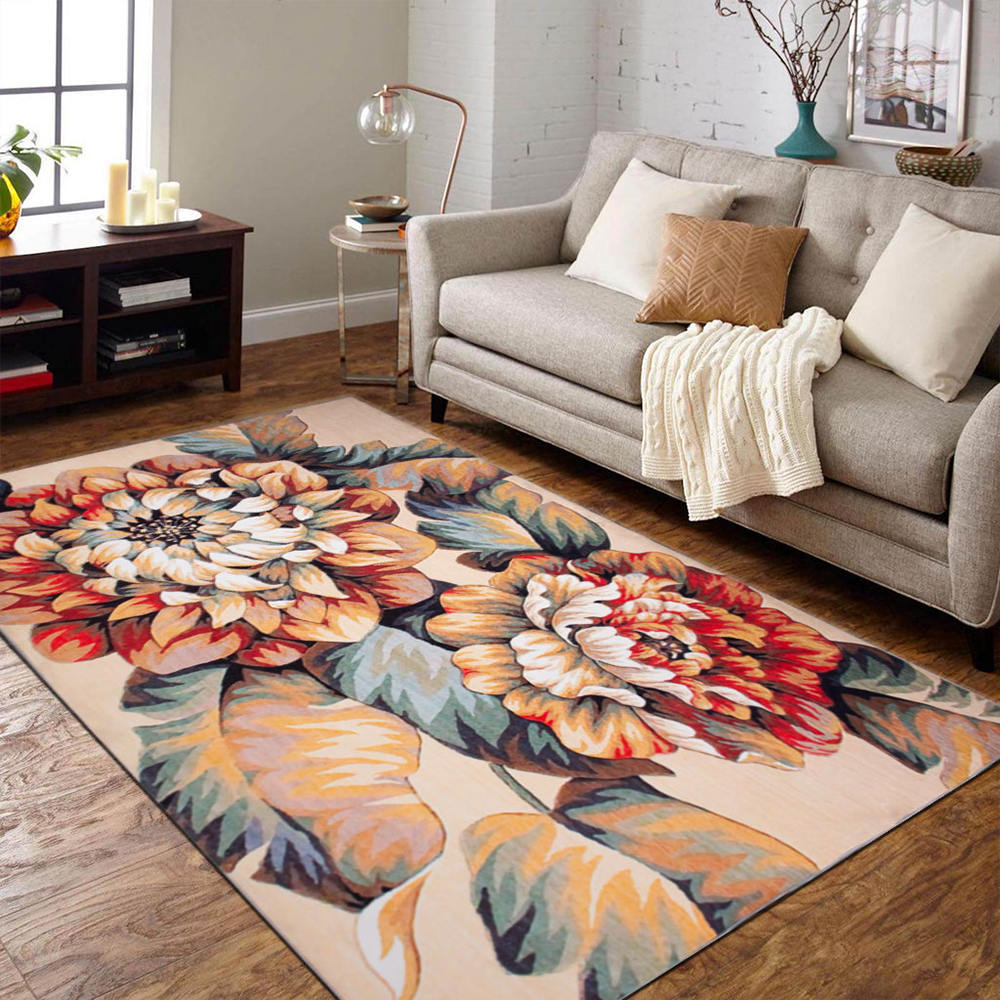
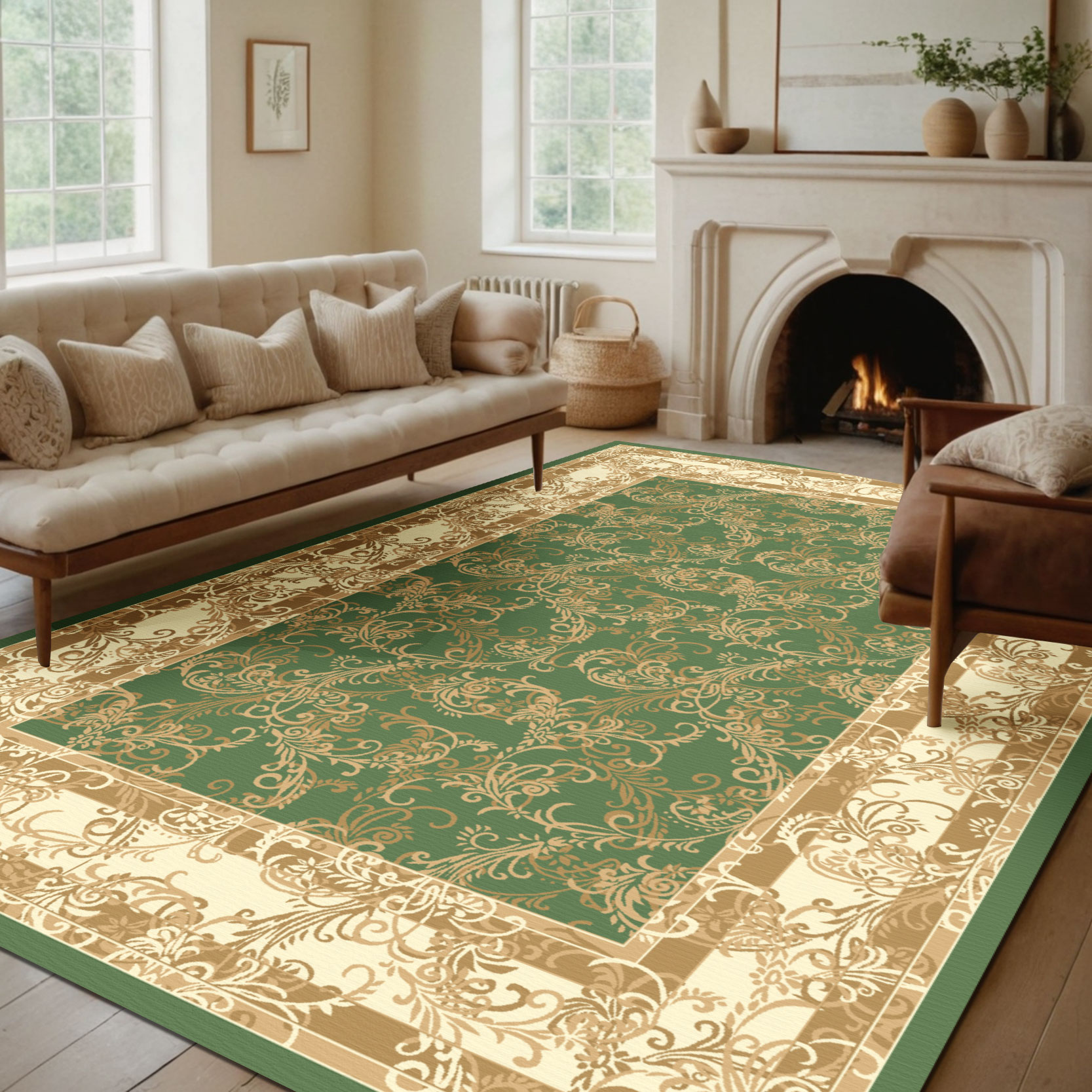
Floral printed area rugs bring a sense of warmth, softness, and organic beauty to a room. They work well in bedrooms, reading nooks, and dining rooms. Modern botanical prints tend to use muted, watercolor-style tones rather than the saturated colors of traditional floral carpets, making them feel fresh and contemporary. Oversized floral prints — where the pattern is large relative to the rug — are particularly on-trend and look striking in living rooms with neutral furniture.
Abstract printed rugs blur the line between floor covering and art installation. Painterly brushstroke designs, color-wash effects, and expressionist patterns are popular in contemporary and eclectic interiors. Because the design is non-representational, these rugs pair well with a wide range of furniture styles and colors. They're a great choice when you want the rug to be the focal point of the room.
Leopard spots, zebra stripes, and tropical leaf prints have had a strong resurgence in interior design. These printed floor rugs add energy and a sense of adventure to a space. They're particularly popular in entryways, bathrooms, and bedrooms where they function as a bold accent piece. Keep the surrounding decor neutral if you go with an animal print to avoid visual overload.
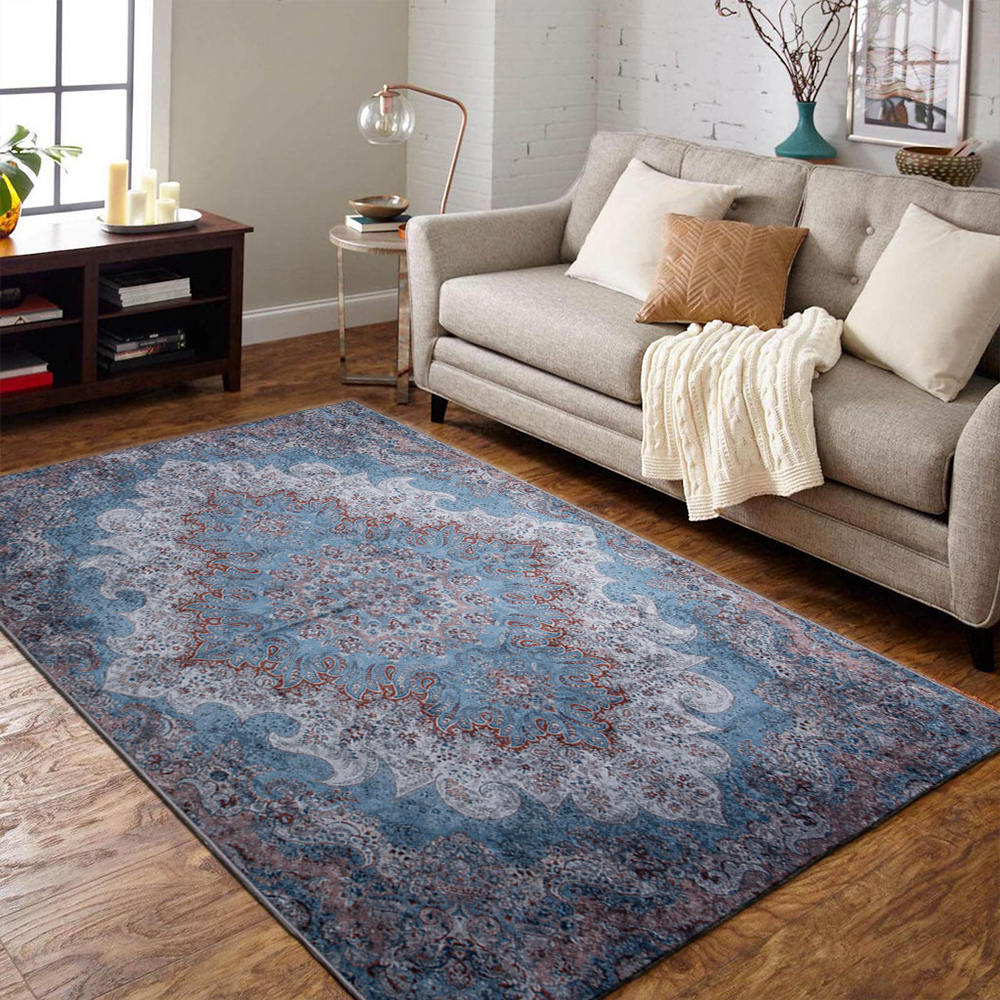
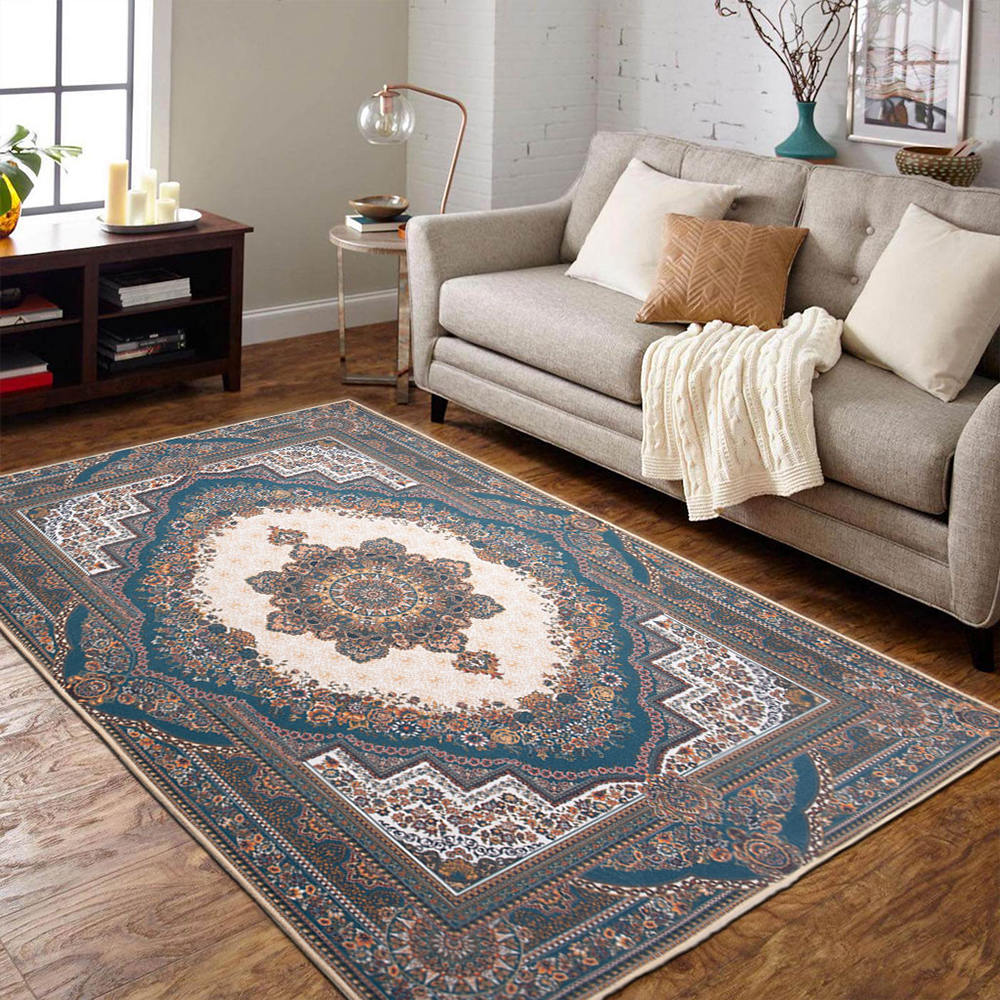
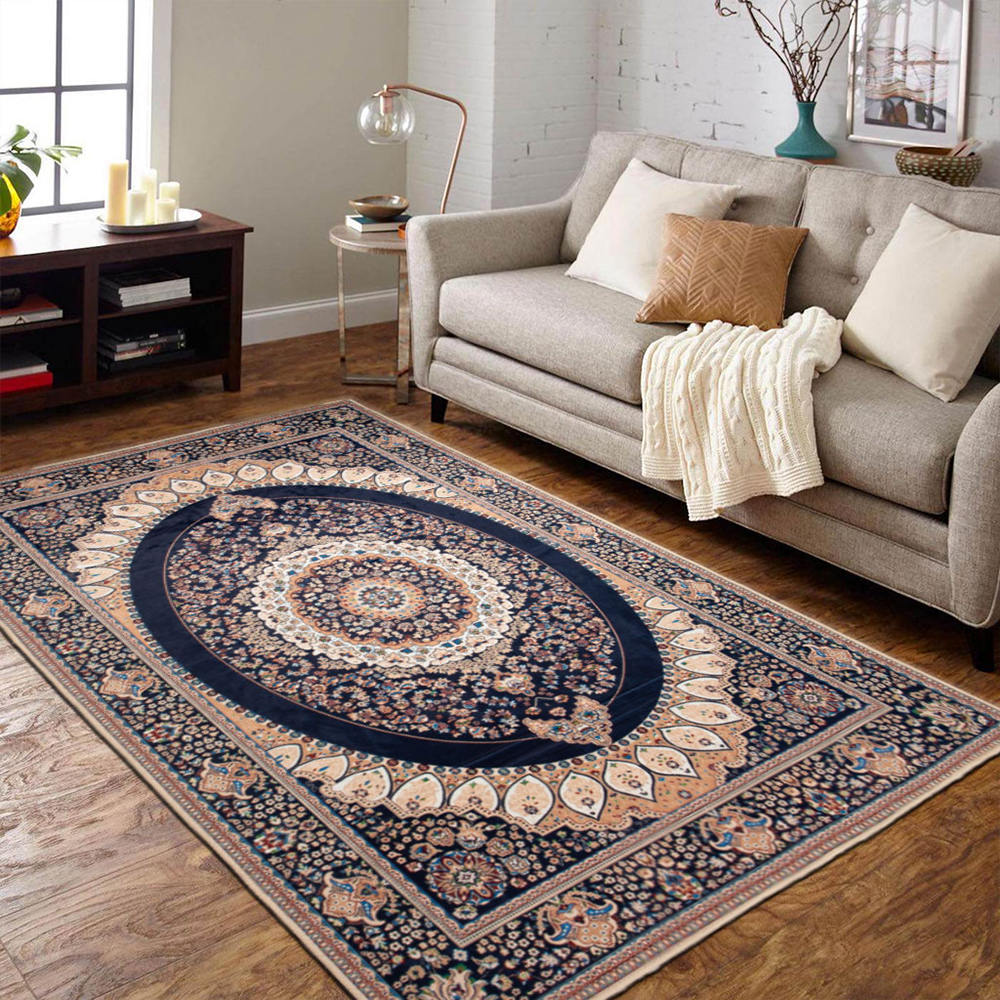
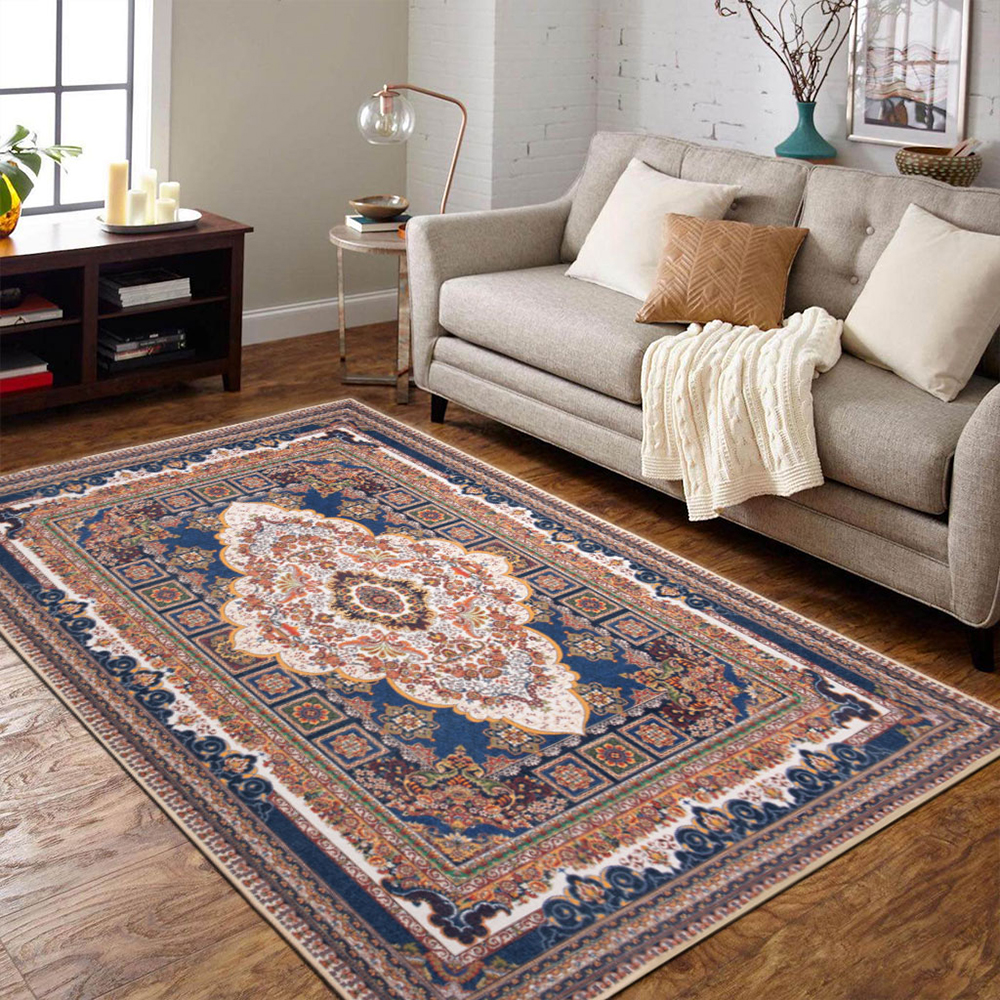
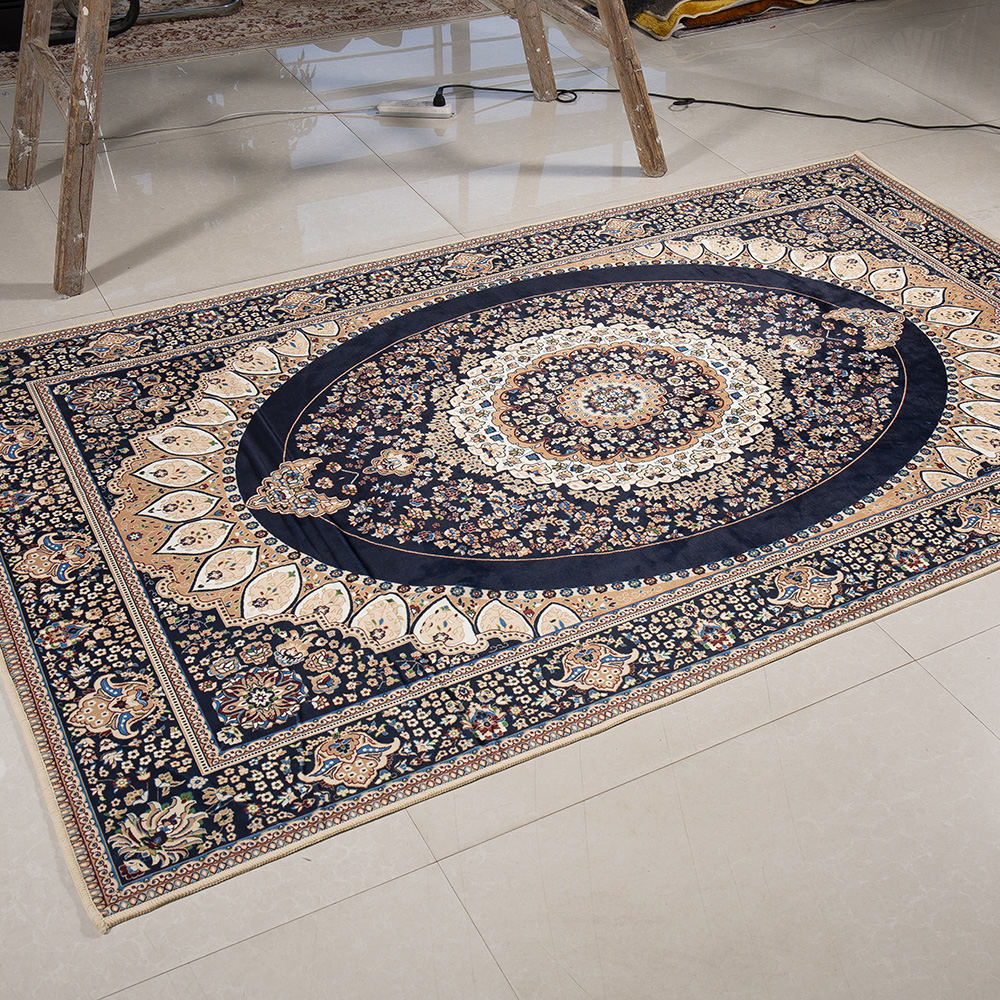
Many affordable printed area rugs mimic the intricate medallion and border designs of traditional hand-knotted Persian or Turkish rugs. These are a great budget-friendly alternative to antique originals and work beautifully in traditional, transitional, and even bohemian interiors. The digital printing process allows for incredible accuracy in reproducing complex traditional motifs that would be extremely expensive to weave.
The most common concern people have with print rugs is how to style them without the room looking chaotic. Here are some practical rules that make it much easier:
Thanks to advances in digital printing technology, custom printed rugs are now accessible to everyday consumers, not just interior designers and commercial clients. Many online rug retailers and print-on-demand services allow you to upload your own image, artwork, logo, or photo and have it printed onto a rug in your chosen size. This opens up incredible possibilities — a map of your city, a family photo, a company logo for an office, or a piece of original artwork scaled up to floor size.
When ordering a custom printed rug, make sure your image file is high resolution (at least 150–300 DPI at the intended print size) to avoid a blurry or pixelated result. Ask the supplier about the printing method, fiber type, and whether dyes are heat-fixed for longevity. Custom rug printing turnaround typically ranges from 5 to 15 business days depending on the supplier and rug size.
Printed rugs require a little extra care compared to solution-dyed woven rugs, since the print is applied to the surface. Follow these maintenance tips to keep your printed floor rug looking sharp for as long as possible:
Printed rugs offer something genuinely unique: access to complex, high-resolution designs at price points far below what hand-knotted or intricately woven alternatives would cost. For decorative purposes, accent pieces, kids' rooms, rental properties, or anyone who likes to refresh their decor regularly, printed area rugs are an excellent and practical choice. At the mid-to-high end of the market, digitally printed rugs on quality nylon or wool bases can also be genuinely long-lasting and beautiful.
The key is to shop smart. Look for rugs that specify reactive or acid dye printing rather than pigment inks, choose nylon or wool as the base fiber for longevity, check that the backing is stable, and always request a sample swatch before ordering a large size. With the right choice, a printed rug can become one of the most impactful design decisions in your entire home.

ADD: No.75 Zhenyuan Road, Yuecheng District, Shaoxing City, Zhejiang Province, China 312000

Tel : +86-189 6750 9795

FAX : +86-0575-8803 2773

Email : fisher@benetextile.com

Copyright © Zhejiang Benyi Textile Technology Co., Ltd. All Rights Reserved. Carpets and Rugs Manufacturer

 English
 Français
 Deutsch
 عربى
عربى