

Industry News
 Home / News / Industry News / Prayer Mats: How to Choose the Right One for Comfort, Quality, and Daily Use
  2026.06.23
 Industry News
A prayer mat is one of the most personal and frequently used items in a Muslim household. Used five times a day during Salah, it serves as a clean, dedicated surface for worship — a physical boundary between the worshipper and the ground beneath them. Yet despite how central it is to daily religious practice, many people give surprisingly little thought to choosing the right one. With so many options available in terms of material, thickness, size, and design, picking a prayer mat that genuinely suits your needs can make a real difference to the comfort and focus of your prayers. This guide covers everything you need to know.
Content
A prayer mat — also known as a prayer rug, sajadah, or namaz mat — is a portable, clean surface used by Muslims during the five daily prayers (Salah). Islamic prayer involves direct physical contact with the ground through prostration (sujood), which requires the forehead, nose, hands, knees, and toes to touch the surface. The mat ensures this contact is made on a clean, dedicated surface, fulfilling the requirement of tahara (ritual purity) during worship.
While any clean surface technically suffices for prayer, a designated prayer mat carries spiritual and practical significance. It creates a sense of ritual and focus, marks a sacred personal space, and protects the worshipper's clothing from floor dirt. For many Muslims, their prayer rug is also a cherished item — often gifted, inherited, or brought back from pilgrimage — with deep personal and emotional meaning.
Beyond the Islamic context, prayer mats are also used in other religious traditions. Christian prayer mats, Buddhist kneeling mats, and Hindu pooja mats all serve a similar function — providing a clean, cushioned surface for kneeling or prostration during devotional practice. This guide focuses primarily on Islamic prayer mats, but much of the guidance on materials and care applies broadly.
Prayer mats come in a range of sizes, and getting the dimensions right matters more than most people realize. The mat needs to be large enough to accommodate your full body during prostration — from your forehead at the top to your feet at the bottom, with enough width to place both hands comfortably on either side.
| Size Category | Typical Dimensions | Best For |
| Standard Adult | 60 x 110 cm (24" x 43") | Average-height adults, everyday home use |
| Large Adult | 70 x 120 cm (28" x 47") | Taller adults, those who prefer more room |
| Extra Large | 80 x 130 cm (31" x 51") and above | Larger frames, maximum comfort during sujood |
| Children's | 40 x 60 cm (16" x 24") | Kids learning to pray |
| Travel / Compact | Foldable, varies | Commuters, travelers, office use |
If you're on the taller side — say, above 5'10" (178 cm) — a standard mat may leave your feet hanging off the end during prostration. Choosing a large or extra-large prayer rug solves this immediately. When shopping online, always check the actual dimensions listed rather than relying on "standard" or "large" labels, as these vary by brand and region.
The material of a prayer mat affects its softness, durability, weight, portability, and ease of cleaning. Here are the most commonly used materials and their pros and cons:
Velvet is one of the most popular materials for prayer mats, particularly in South Asian and Middle Eastern markets. Velvet prayer rugs have a soft, plush surface that feels comfortable during sujood and gives the mat a rich, luxurious appearance. They typically feature intricately woven or printed designs of mosques, minarets, or geometric Islamic patterns in vibrant colors. The downside is that velvet mats can be harder to clean — they're not usually machine washable and can flatten over time with heavy use. They're best suited for home use rather than travel.
Foam-padded namaz mats have a layer of foam or sponge built into the base, providing extra cushioning for the knees and forehead during prostration. These are especially popular among older worshippers or anyone with joint pain or knee problems. The padding significantly improves comfort during long prayers or extended dhikr sessions. Many foam-padded mats also fold into a compact rectangle for easy storage or travel. The trade-off is that they tend to be bulkier and heavier than thinner mats.
Traditional hand-woven or machine-woven prayer rugs made from wool or cotton are among the most durable and long-lasting options. Wool prayer mats in particular are prized for their natural softness, temperature regulation, and longevity — a high-quality wool sajadah can last decades if cared for properly. Cotton mats are lighter, often machine washable, and more affordable. Both materials tend to feature flat-weave or low-pile constructions with traditional geometric or arabesque patterns. These are the prayer mats most likely to be passed down through generations.
Most budget-friendly prayer mats are made from polyester or other synthetic fibers. These are lightweight, easy to clean, resistant to fading, and available in a huge range of designs. They're a practical choice for everyday use, travel, or for children. The main drawback is that synthetic mats tend to feel less luxurious underfoot and can develop static or slip on smooth floors. Look for mats with a non-slip rubber or latex backing if this is a concern.
A newer category gaining popularity, memory foam prayer mats feature a high-density memory foam core covered with a soft fabric top layer. They contour to the shape of your knees and forehead, distributing pressure evenly and reducing discomfort during prostration. These are particularly beneficial for those who pray for extended periods, the elderly, or people recovering from injury. They tend to be pricier than standard mats but offer a noticeably superior comfort experience.
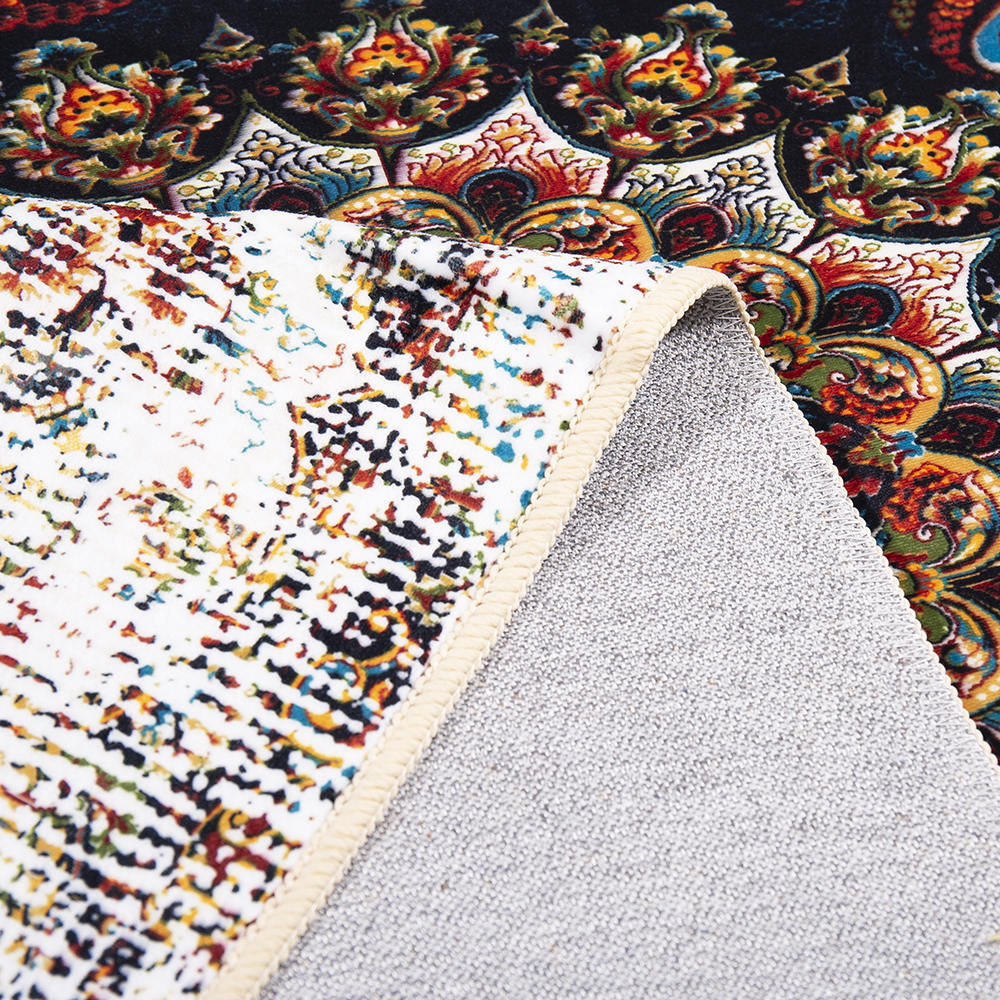
Beyond size and material, several other features determine the overall quality and usability of a prayer mat. Here's what to evaluate before making a purchase:
Prayer mat designs vary widely across the Muslim world, reflecting the rich diversity of Islamic art and regional craft traditions. Turkish prayer rugs are known for their intricate Ottoman-style floral and geometric motifs, often in deep reds, blues, and golds. Persian-style prayer carpets feature elaborate arabesque patterns with fine detail that reflects centuries of carpet-weaving tradition. Pakistani and Indian prayer mats commonly feature the iconic mosque silhouette with minarets and a central arch, often in vibrant jewel tones on a velvet ground.
Contemporary designers have also introduced minimalist prayer mats — clean, simple designs in neutral tones such as white, grey, or beige — that appeal to those who prefer understated aesthetics or want a mat that blends seamlessly into a modern home interior. Some mats incorporate subtle Quranic calligraphy or geometric Islamic patterns without being visually busy. There's no religious requirement for a specific design, so the choice comes down entirely to personal preference and aesthetic taste.
Keeping your prayer mat clean is both a practical and religious necessity. Here's how to care for the most common types properly:
A prayer mat is one of the most thoughtful and appropriate gifts you can give to a Muslim friend, family member, or colleague — particularly for occasions like Eid, Ramadan, a new baby, a wedding, or a pilgrimage (Hajj or Umrah). When choosing a prayer mat as a gift, consider the recipient's preferences carefully. An elderly relative might appreciate a thick foam-padded mat for comfort. A teenager or young adult might prefer a sleek, modern minimalist design. Someone who travels frequently would benefit from a high-quality compact travel prayer mat with a compass.
Luxury prayer mats — such as handwoven Turkish or Persian-style rugs in premium wool — make especially meaningful and long-lasting gifts for significant occasions. Many specialist retailers also offer personalized prayer mats with embroidered names or custom designs, which add a deeply personal touch. When gifting, pairing the mat with a tasbeeh (prayer beads) or a Quran holder makes for a complete and beautifully considered present.
The best prayer mat is ultimately the one that supports your worship most effectively — one that's the right size for your body, comfortable enough for daily prostration, easy to keep clean, and meaningful to you personally. Whether you prefer the rich tradition of a hand-woven Turkish prayer rug, the everyday practicality of a machine-washable synthetic mat, or the therapeutic comfort of a memory foam sajadah, there's an option that fits your needs and budget. Take the time to check the dimensions, material, backing, and care instructions before buying, and you'll find a prayer mat that serves you faithfully for years to come.

ADD: No.75 Zhenyuan Road, Yuecheng District, Shaoxing City, Zhejiang Province, China 312000

Tel : +86-189 6750 9795

FAX : +86-0575-8803 2773

Email : fisher@benetextile.com

Copyright © Zhejiang Benyi Textile Technology Co., Ltd. All Rights Reserved. Carpets and Rugs Manufacturer

 English
 Français
 Deutsch
 عربى
عربى