

Industry News
 Home / News / Industry News / Imitation Cashmere Area Rugs: What Buyers Need to Know Before Purchasing
  2026.07.02
 Industry News
Content
An imitation cashmere area rug is designed to replicate the soft, warm, and luxurious feel of real cashmere wool without the high price tag that comes with genuine animal fiber products. These rugs are typically made from synthetic or blended fibers — most commonly microfiber, viscose, acrylic, or polyester — that are engineered to mimic the fine texture and subtle sheen associated with cashmere. The result is a rug that looks and feels premium at a fraction of the cost of natural wool or true cashmere alternatives.
For buyers — whether sourcing for retail, interior design projects, or personal use — understanding what goes into a faux cashmere rug is the first step to making a purchase you won't regret. The term "imitation cashmere" can cover a wide range of quality levels, and the fiber type, pile density, and construction method all play a significant role in how the rug actually performs in a real living environment.
Not all imitation cashmere area rugs are made from the same material, and the fiber choice has a direct impact on softness, durability, and how the rug ages over time. Here is how the most common materials compare:
| Fiber Type | Softness | Durability | Best Use |
| Microfiber | Very High | Moderate | Bedrooms, low-traffic areas |
| Viscose / Rayon | High | Low to Moderate | Decorative, accent spaces |
| Acrylic | High | High | Living rooms, moderate traffic |
| Polyester | Moderate to High | Very High | High-traffic areas, family rooms |
| Blended (Acrylic + Polyester) | High | High | Versatile, most room types |
Microfiber and viscose tend to produce the most convincing cashmere-like softness but require more careful maintenance. Acrylic and polyester blends offer a better balance of softness and practicality for households with children or pets. Buyers sourcing for retail or wholesale should ask suppliers for fiber content breakdowns rather than accepting vague descriptions like "cashmere feel" without specifics.
Beyond fiber type, pile construction is what most directly affects how a plush imitation cashmere rug looks and feels underfoot over time. There are several construction details worth paying attention to when comparing products.
Imitation cashmere area rugs typically feature a medium to high pile, usually between 25mm and 50mm. Higher pile rugs feel softer and more luxurious but tend to mat down faster in high-traffic zones and are harder to vacuum thoroughly. For a bedroom or lounge area where the rug is primarily decorative and lightly used, a longer pile makes sense. For areas with regular foot traffic, a shorter, denser pile holds its shape better over time.
Density is measured by how tightly the fibers are packed into the backing. A higher density rug uses more material per square meter, which increases cost but significantly improves durability and plushness retention. When comparing two cashmere-like area rugs at similar pile heights, the denser one will feel fuller underfoot and resist crushing far better after months of use. Buyers can check density by pressing a hand into the pile — a well-constructed rug springs back quickly; a low-density rug stays compressed.
The backing affects both the rug's stability and its suitability for different floor types. Latex or non-slip backings are common in quality imitation cashmere area rugs and help prevent the rug from shifting on hard floors. Jute or cotton secondary backings tend to be more breathable and less prone to discoloration over time, while synthetic backings are more moisture-resistant but can occasionally cause yellowing on light-colored hardwood floors if left in place for extended periods.
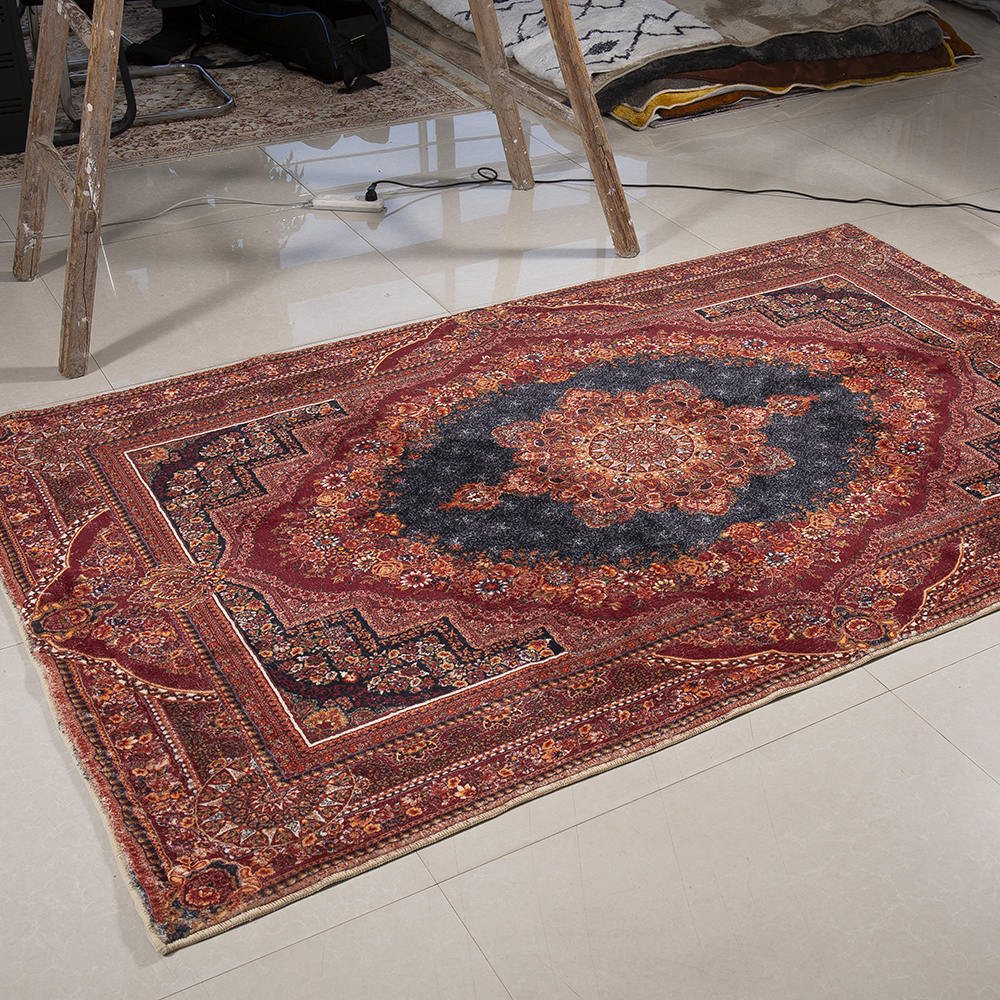
Size is one of the most common mistakes buyers make with area rugs. A cashmere-feel rug that is too small for a room ends up looking like a floor tile rather than an anchor for the space. As a general sizing guide:
For wholesale buyers or retailers building product ranges, offering at least three standard sizes per design — typically a small accent size, a mid-range living room size, and a large format option — covers the majority of residential use cases and reduces customer drop-off due to sizing limitations.
The visual appeal of a faux cashmere rug is closely tied to its color and pattern design. Unlike natural cashmere or wool rugs that have inherent texture variation, imitation cashmere area rugs rely more heavily on pattern and color to convey a premium look. Solid or tone-on-tone designs in neutral shades — ivory, champagne, taupe, grey, and soft blush — tend to have the broadest commercial appeal and pair well with both contemporary and traditional interiors.
Geometric patterns, abstract motifs, and subtle medallion designs work well in the cashmere-like texture because the pile adds depth to the pattern without requiring complex construction methods. Buyers should also pay attention to how colors are rendered in production — dye consistency across a batch is particularly important for large wholesale orders, as color variation between pieces in the same SKU creates returns and complaints.
One of the practical advantages of a cashmere-like area rug over genuine cashmere is that synthetic fiber rugs are generally easier to maintain. That said, there are a few care habits that make a significant difference in how long the rug holds its appearance.
If you are sourcing imitation cashmere area rugs for resale or interior supply, a few targeted questions during the supplier evaluation process can save significant time and money later.
Suppliers who are reluctant to answer these questions directly or who cannot provide documentation for fiber content and safety testing are worth approaching with caution, regardless of how competitive their pricing appears on the surface.

ADD: No.75 Zhenyuan Road, Yuecheng District, Shaoxing City, Zhejiang Province, China 312000

Tel : +86-189 6750 9795

FAX : +86-0575-8803 2773

Email : fisher@benetextile.com

Copyright © Zhejiang Benyi Textile Technology Co., Ltd. All Rights Reserved. Carpets and Rugs Manufacturer

 English
 Français
 Deutsch
 عربى
عربى