

Industry News
 Home / News / Industry News / Printed Area Rugs: A Practical Buyer's Guide to Patterns, Materials, and Quality
  2026.07.07
 Industry News
Content
A printed area rug gets its pattern through a surface printing process applied to the rug face, rather than through woven or tufted construction where the pattern is built into the pile itself. This distinction matters for buyers because it affects everything from design flexibility and production cost to how the rug wears over time. Printed rugs can achieve highly detailed graphics, photorealistic imagery, and complex color gradients that would be extremely difficult or prohibitively expensive to reproduce through traditional weaving or hand-tufting methods.
For commercial buyers, interior designers, and e-commerce retailers, printed area rugs offer a practical combination of visual variety and competitive pricing. The manufacturing process is faster than woven alternatives, which means shorter lead times and more flexibility to respond to design trends without committing to large production runs of any single pattern.
Not all printed rugs are produced the same way. The printing method used has a direct impact on color vibrancy, pattern sharpness, ink durability, and how the rug handles washing or heavy use. Understanding the main printing techniques helps buyers ask the right questions when evaluating suppliers.
Digital inkjet printing is currently the most widely used method for producing decorative printed area rugs at scale. The process uses industrial-grade printers that apply ink directly onto the rug surface with very high precision, allowing for unlimited color combinations and fine pattern detail. Digital print area rugs are particularly well-suited to photographic designs, botanical prints, abstract art-inspired patterns, and anything with color transitions or gradients. The main limitation is ink penetration depth — in thick pile rugs, the print sits on or near the surface and can show wear in high-traffic areas over time.
Screen printing uses a stencil-based process where each color is applied separately through a mesh screen. It produces rich, opaque colors and works well for bold geometric patterns, two-tone designs, and repeat motifs with clearly defined edges. Screen printing is less flexible than digital printing when it comes to complex multicolor designs, but the ink adhesion tends to be stronger, which can make it more suitable for flatweave or low-pile rugs used in higher-traffic environments. Setup costs are higher per design, making it more economical at larger production volumes.
Heat transfer printing involves printing the design onto a transfer paper first, then using heat and pressure to bond the image to the rug surface. This method can achieve very sharp, vibrant results and is commonly used for polyester-based rugs. Heat transfer printed rugs tend to have excellent color accuracy and are a practical option for custom or short-run orders where digital printing setup isn't cost-effective. The tradeoff is that heat transfer prints can feel slightly stiffer on the rug surface compared to direct inkjet applications.
The substrate — the base material the design is printed onto — has as much influence on the rug's performance as the printing method itself. Different fiber types absorb and hold ink differently, which affects both initial appearance and long-term color retention.
| Material | Print Quality | Durability | Best Application |
| Polyester | Excellent color vibrancy | High | Living rooms, bedrooms, general retail |
| Polypropylene (PP) | Good, slightly muted tones | Very High | High-traffic areas, outdoor-use rugs |
| Nylon | Very good with rich saturation | Very High | Commercial spaces, heavy foot traffic |
| Cotton | Natural, softer tones | Moderate | Flatweave styles, washable rugs |
| Microfiber | Excellent detail reproduction | Moderate | Decorative, low-traffic spaces |
Polyester is the most common base material for digital print area rugs in the mid-range retail segment because it accepts ink cleanly, produces vivid colors, and is relatively affordable to manufacture. Polypropylene is the better choice when UV resistance and moisture tolerance matter, making it a go-to material for indoor-outdoor printed rugs or spaces prone to spills.
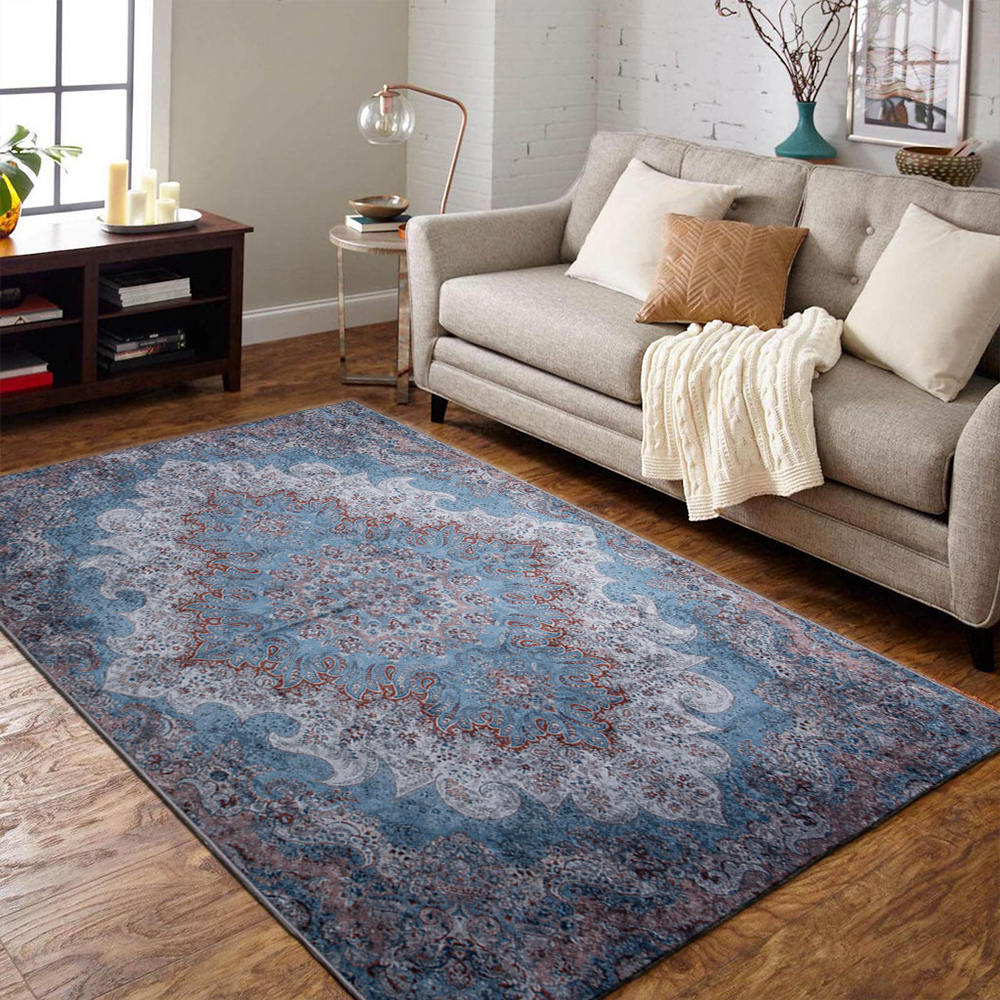
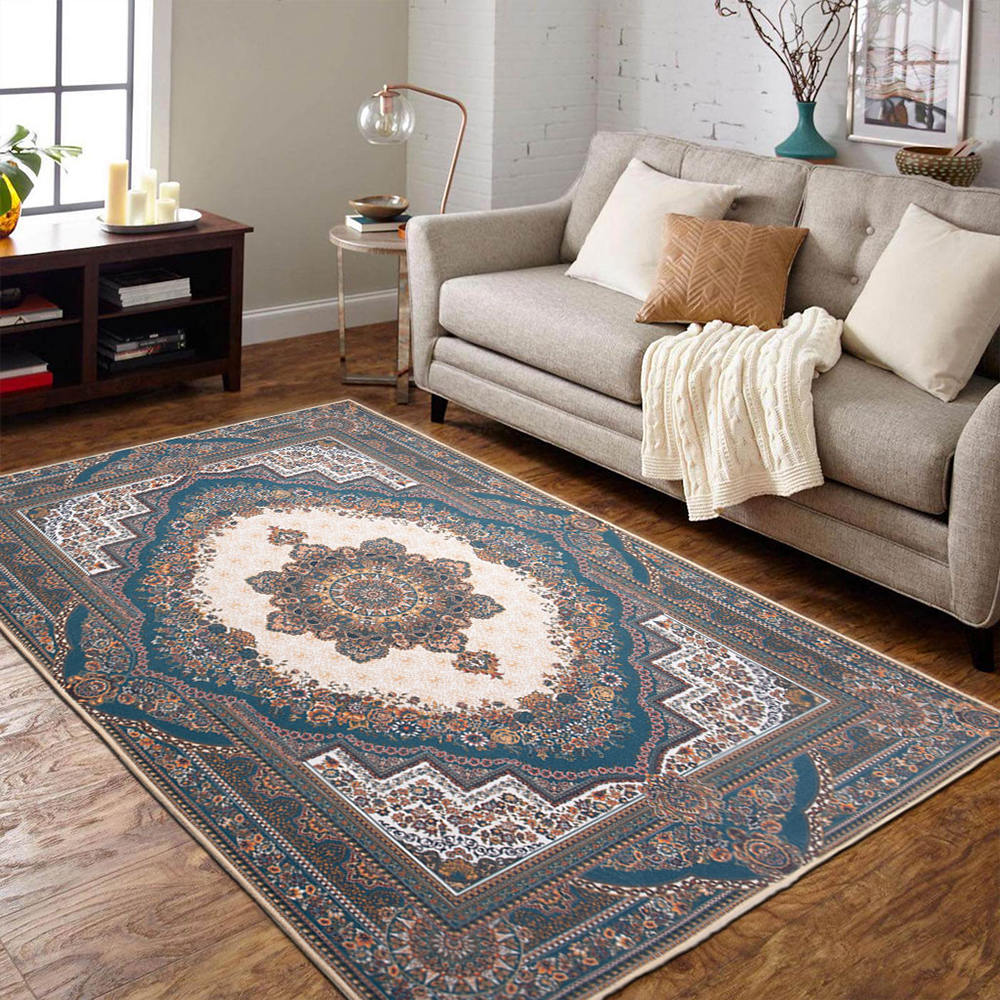
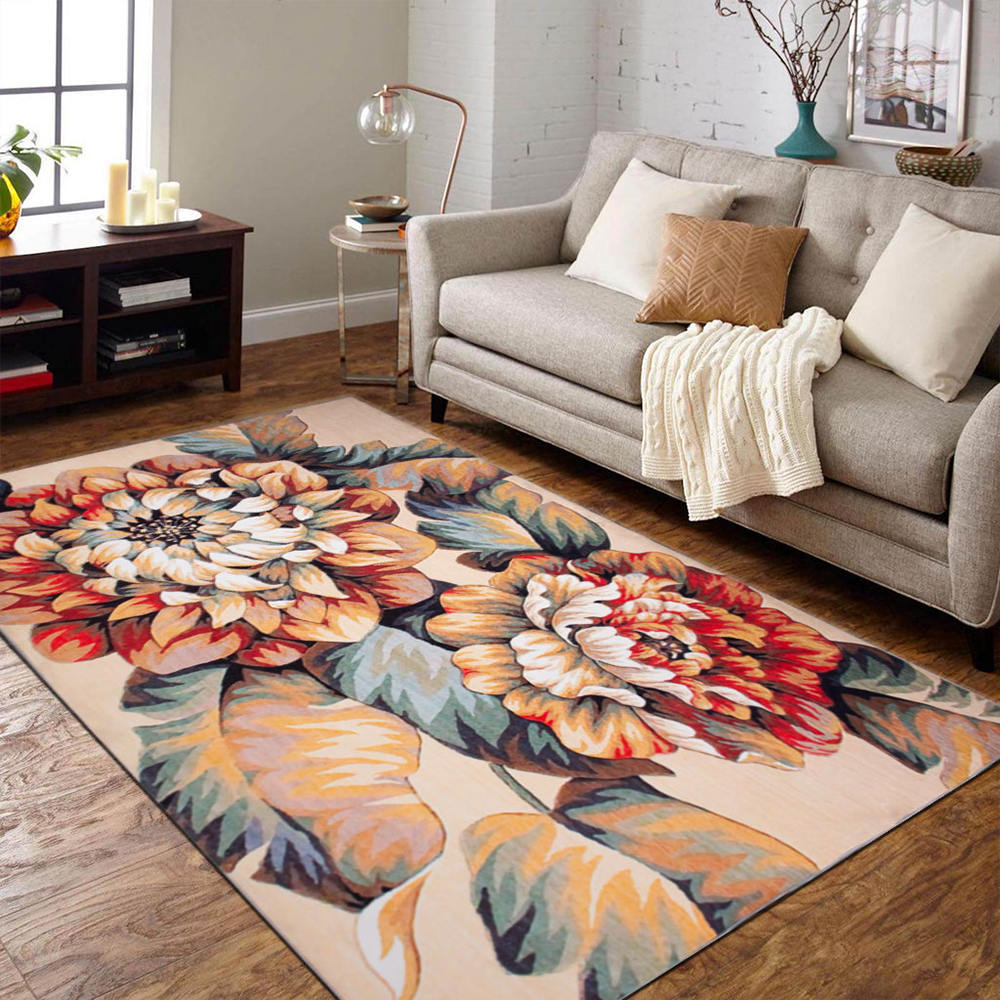
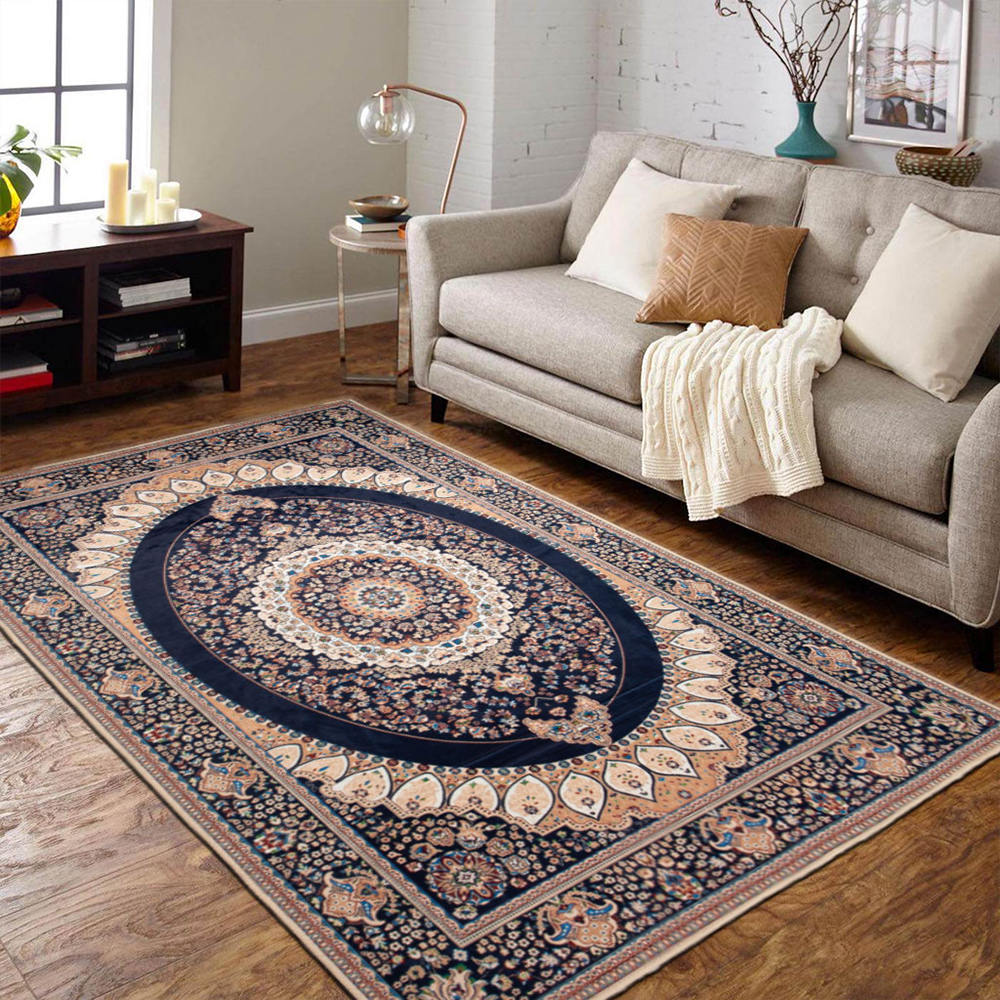
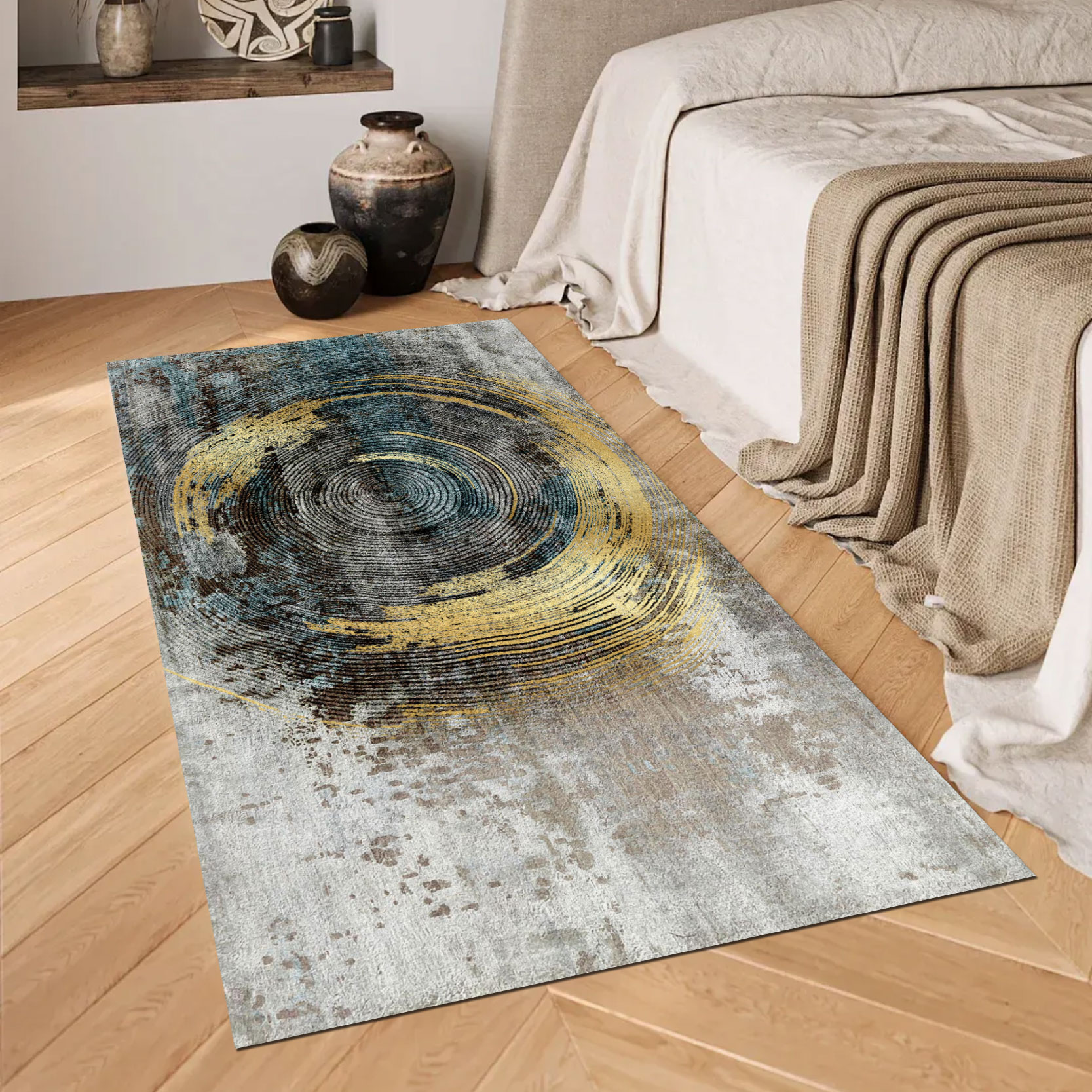
For buyers building a product range or sourcing printed rugs for retail, understanding which design categories have consistent commercial demand helps narrow down supplier conversations and inventory decisions. While trends shift seasonally, certain pattern families maintain steady year-round appeal.
Printed area rugs vary considerably in quality even within the same price bracket. Buyers evaluating suppliers or reviewing samples should pay attention to the following quality markers rather than relying solely on visual appeal from product images.
Colorfastness refers to how well the printed colors resist fading from light exposure, washing, and friction. For printed area rugs sold in markets with direct sunlight exposure, UV colorfastness is particularly important. Ask suppliers for ISO colorfastness test results, or at minimum request samples that you can test yourself by placing a section in direct sunlight for a few days and comparing against the original. Low-quality inks fade noticeably within months, which generates returns and damages brand reputation for retailers.
On well-produced patterned area rugs, pattern lines should be sharp and consistently aligned across the full rug surface. Blurred edges, color overlap, or pattern drift toward the edges of the rug are signs of printing calibration issues or aging equipment at the production facility. This is easier to spot on geometric and lattice patterns than on soft botanical designs, so geometric samples are often the best way to assess a supplier's printing precision.
Fold the rug back on itself and look at the base of the pile near the backing. On a quality printed rug, ink should have penetrated at least partway down the fiber rather than sitting entirely on the surface tips. Rugs where ink only coats the very top of the pile will show pale, washed-out areas quickly in any spot that receives regular foot contact, as the unprinted fiber base becomes exposed through normal wear.
The backing of a printed area rug affects stability, floor safety, and moisture behavior. A latex or TPR (thermoplastic rubber) non-slip backing is standard for most consumer-grade printed rugs and prevents movement on hard floors. Check that the backing is evenly applied without thin spots or bubbling, and confirm whether it is suitable for use on both hardwood and tile without causing discoloration — a common complaint with low-quality latex backings left on light wood floors for extended periods.
Custom printed area rugs are increasingly accessible for both large-volume wholesale buyers and smaller brands looking to differentiate their product range. Digital printing technology means that custom designs can be produced without the expensive tooling costs that traditional woven customization requires. However, there are practical details that affect the feasibility and outcome of custom orders.
Even a well-produced printed area rug will deteriorate faster than necessary without appropriate care. The print layer is the most vulnerable part of the rug to improper cleaning, so care guidance matters both for end consumers and for wholesale buyers who need to provide accurate product information to their retail customers.
Whether you are placing a first order or evaluating a new supplier, a targeted set of questions helps surface quality and reliability issues before they become problems after delivery. The following questions apply regardless of order size or design type.
Suppliers who can answer these questions clearly and provide documentation to back up their claims are generally the more reliable partners for long-term sourcing relationships. Hesitation or vague answers around colorfastness testing and fiber content are worth treating as a warning sign, regardless of how competitive the pricing appears at first glance.

ADD: No.75 Zhenyuan Road, Yuecheng District, Shaoxing City, Zhejiang Province, China 312000

Tel : +86-189 6750 9795

FAX : +86-0575-8803 2773

Email : fisher@benetextile.com

Copyright © Zhejiang Benyi Textile Technology Co., Ltd. All Rights Reserved. Carpets and Rugs Manufacturer

 English
 Français
 Deutsch
 عربى
عربى