

Industry News
 2026.01.06
 Industry News
Content
Carpet, a staple in homes and businesses for centuries, starts its life not as a finished floor covering, but in large, often overlooked, Carpet Fabric Rolls. These rolls represent the raw material—the textile structure—that will eventually become the plush, durable, or decorative surface underfoot. Understanding what goes into these rolls is key to appreciating the engineering behind modern flooring.
Every carpet fabric roll consists of two main structural components that sandwich the yarn: the primary and secondary backing.
Primary Backing: This is the material, usually woven polypropylene or polyester, into which the carpet fibers (yarn) are directly tufted. It serves as the initial foundation, holding the tufts in place before the final layers are applied. Think of it as the canvas upon which the design is created.
Secondary Backing: Applied to the underside of the primary backing, this layer is often a heavy woven jute, synthetic fiber (like woven polypropylene), or foam. Its main purposes are to provide dimensional stability, adding weight and preventing the carpet from stretching or shrinking, and to enhance cushioning and insulation.
The actual visible surface of the carpet is made from yarn, which is what gives the carpet its color, texture, and performance characteristics. The choice of fiber material is one of the most crucial factors determining the carpet’s use and longevity.
Nylon: The most popular synthetic fiber due to its exceptional durability, resilience, and resistance to wear and abrasion. It also accepts dyeing well, offering vibrant and lasting colors.
Polypropylene (Olefin): Known for its inherent resistance to moisture, mildew, and fading. It’s often used in basement or outdoor carpets, and commercial settings due to its lower cost and stain resistance, particularly against water-based stains.
Polyester (PET): Highly prized for its luxurious feel and vibrant color clarity. Many newer polyester carpets are made from recycled plastic bottles, offering an environmentally friendly option. They are naturally stain-resistant, but typically less resilient (less "crush-resistant") than nylon.
Wool: A natural, premium fiber known for its excellent softness, natural elasticity, and fire resistance. While more expensive, wool has superior longevity and a classic, luxurious look.
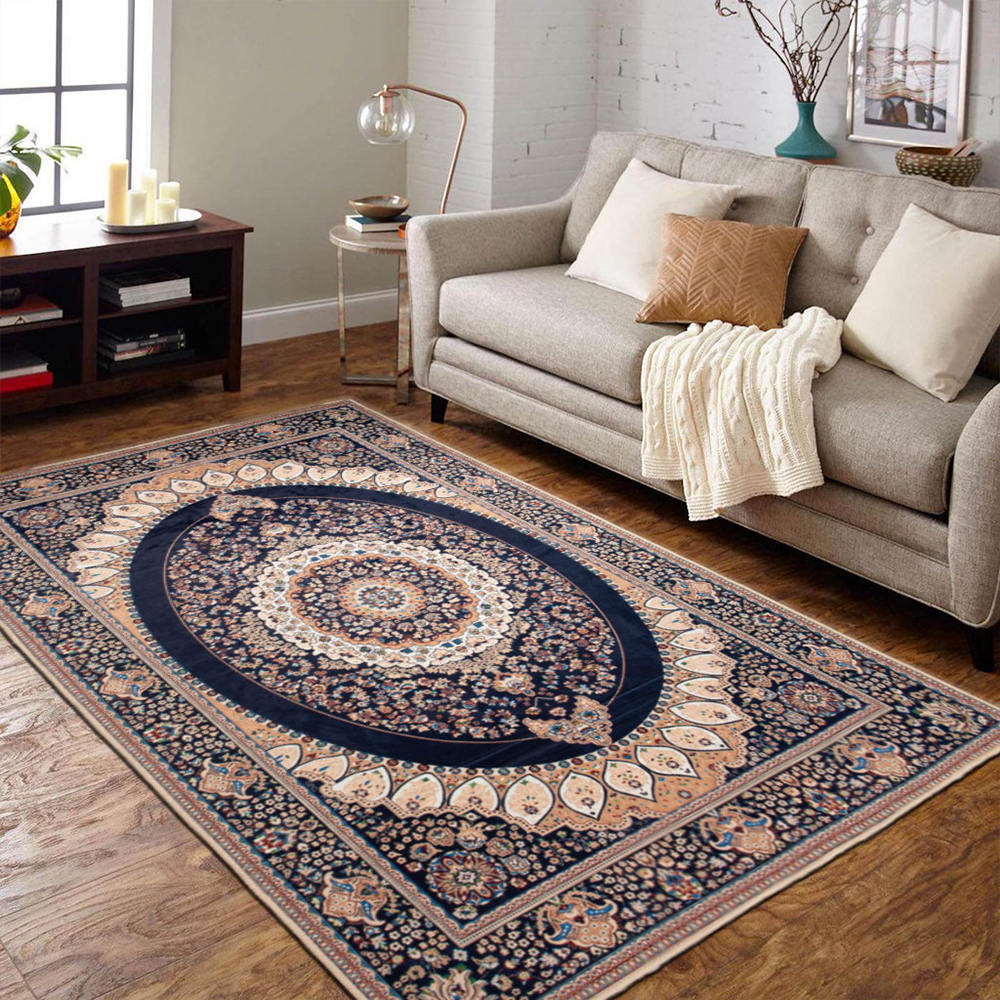
The process that transforms raw fibers into a carpet fabric roll is a sophisticated dance of machinery and precision.
The vast majority of carpet is made using a process called tufting. This involves a massive machine with hundreds of needles punching loops of yarn through the primary backing material.
Loop Pile: The yarn loops are left intact, creating a carpet with a uniform, rugged surface. This construction is very durable and less likely to show footprints.
Cut Pile: The loops are cut at the top, allowing the fiber ends to stand straight up. This creates a softer, more luxurious feel. Styles like Frieze (highly twisted yarn) and Saxony (straight yarn) are variations of cut pile.
Once the fibers are tufted into the primary backing, the fabric is treated with a binding agent, usually a latex adhesive.
Latexing: The latex is applied to the back of the primary backing to securely lock the tufts in place, preventing the yarn from pulling out. This step is critical for the carpet’s structural integrity.
Backing Application: The secondary backing is then bonded to the latex-coated primary backing. This multi-layered structure is what provides the final strength and stability.
Shearing and Rolling: The face of the carpet may be sheared to ensure an even pile height and finish. Finally, the finished material is wound tightly onto large cardboard or plastic cores, forming the standard Carpet Fabric Rolls ready for distribution to retailers and installers worldwide.
When a consumer selects a carpet, they are ultimately choosing the result of a precise formula embedded in the carpet fabric roll: the fiber type, pile construction, and, importantly, the density and twist.
Density refers to how closely packed the individual yarn tufts are. A higher density means more fiber is used in a given area, resulting in a more durable and resilient carpet that will resist matting and crushing. You can often feel this by pressing down on the carpet—a high-density carpet will feel firmer and "bounce back" quicker.
Twist level is the number of times the individual fibers are turned together in a bundle (ply). A high twist level means the yarn is more tightly bound, which directly correlates to long-term performance. Tightly twisted yarns are better able to stand up to foot traffic and resist fraying or untwisting over time.
By understanding the construction, from the selection of fibers to the application of the backing, one gains a greater appreciation for the complexity contained within every Carpet Fabric Roll that makes our indoor spaces comfortable and aesthetically pleasing.

ADD: No.75 Zhenyuan Road, Yuecheng District, Shaoxing City, Zhejiang Province, China 312000

Tel : +86-189 6750 9795

FAX : +86-0575-8803 2773

Email : fisher@benetextile.com

Copyright © Zhejiang Benyi Textile Technology Co., Ltd. All Rights Reserved. Carpets and Rugs Manufacturer

 English
 Français
 Deutsch
 عربى
عربى