

Industry News
 2025.12.09
 Industry News
The term "carpet fabric" is a key identifier for the very essence of a floor covering—the fibers that make up its visible surface, known as the pile. These materials are what determine the carpet's look, feel, durability, and suitability for different environments. From luxurious natural wool to resilient synthetic options, the choice of fabric is the most critical factor in a carpet's performance and longevity.
Content
Beyond the fiber type, the actual construction and density of the yarn are the primary drivers of long-term performance and wear resistance.
The resilience of a carpet—its ability to bounce back from foot traffic—is determined by two measurable specifications:
Yarn Twist (TPI): This refers to the number of Twists Per Inch in the individual yarn bundle. In cut-pile carpets (like Saxony or Plush), a high twist level is vital.
High Quality: A TPI of 5 to 7 indicates excellent quality. The tighter the yarn is twisted, the more resilient it is, preventing the tips from unraveling (a process called "blooming") and resisting matting and crushing.
Low Quality: Lower TPI carpets appear soft initially but will quickly lose shape in active areas.
Density: This refers to the concentration of fiber mass within a given area. It is determined by the combination of Face Weight (the ounces of fiber per square yard) and the tightness of the tufting (gauge and stitch rate).
High Density: Denser carpets feel firmer underfoot and are significantly more durable because the fibers support each other, preventing crushing and keeping the tips upright. Density is often the best indicator of a carpet's lasting value.
The aesthetic appeal is controlled by how the fiber reflects light, known as its luster or sheen. This is achieved by manipulating the fiber's cross-section during extrusion.
Bright: Highly reflective, often used to make synthetic fibers look opulent.
Semi-Bright/Lustrous: The common standard for many nylons, offering a balanced sheen.
Matte: Low reflection, characteristic of high-quality wool, providing a rich, subdued finish.
Carpet fibers are broadly categorized into natural and synthetic, each offering a distinct profile of benefits and trade-offs.
Nylon (Polyamide): The Gold Standard
Resilience: Possesses superior elasticity and "memory," making it the top choice for high-traffic environments (stairs, hallways). This resilience is locked in by heat-setting the high yarn twist.
Stain & Soil Protection: While historically hydrophilic, modern nylon is treated with advanced, inherent stain-resistant technologies that chemically alter the fiber structure to repel spills.
Triexta (PTT): The Stain Champion
Inherent Resistance: Unlike topical treatments, Triexta's exceptional resistance to staining (including many harsh chemicals) is built into its molecular structure, lasting the carpet's lifetime.
Durability: Offers better resilience than traditional polyester, providing a strong balance between performance and exceptional softness.
Polypropylene (Olefin): The Moisture Barrier
Moisture Resistance: Highly resistant to water-based stains because it is hydrophobic (water-repelling). This makes it excellent for basements and outdoor areas.
Colorfastness: It is exclusively solution-dyed (color added before the fiber is made), resulting in superior resistance to fading from sun or bleach.
Trade-off: Lacks the memory of nylon, making it prone to crushing, which is why it performs best in durable, low-profile Berber loop constructions.
Polyester (PET): The Soft Eco-Choice
Plush Feel: Known for its exceptional softness, making it ideal for low-traffic luxury areas like bedrooms.
Sustainability: Many polyester carpets are made from recycled plastic (PET) bottles.
Trade-off: Lowest resilience among synthetics; highly susceptible to matting and crushing under heavy furniture or sustained traffic.
Wool: The Premium Choice
Natural Performance: Inherently durable, elastic, and fire-resistant. Its natural crimp provides excellent recovery from compression.
Moisture Management: Naturally absorbs and releases moisture, helping to regulate indoor humidity.
Care: Requires specialized, neutral-pH cleaning agents and professional service to maintain its structure and prevent chemical damage.
Sisal, Jute, Seagrass: Highly textured, renewable materials prized for their organic look. They are very hard-wearing but lack the plush comfort of wool and are highly absorbent, making them unsuitable for areas prone to spills or high moisture.
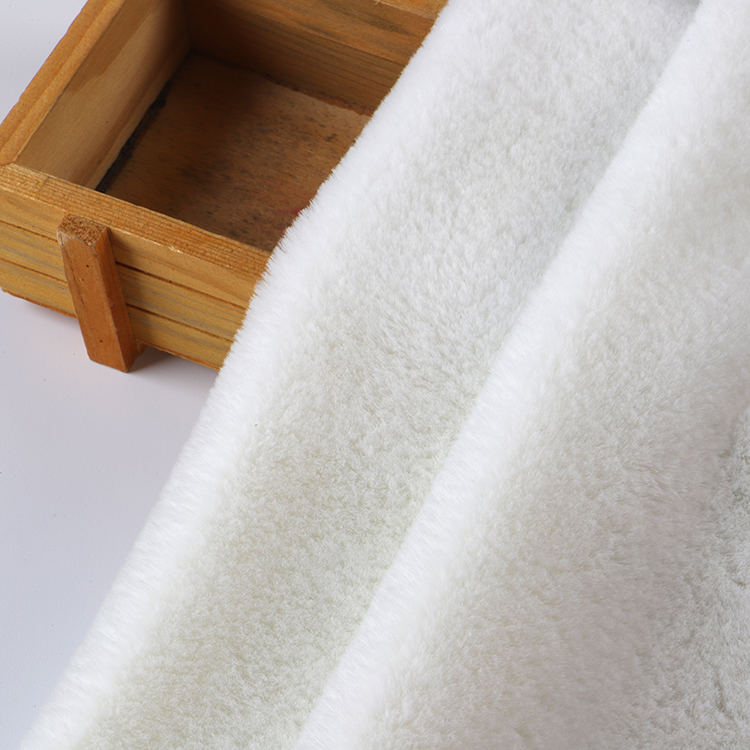
While the fabric is the face of the carpet, the backing system provides the foundational stability, wear protection, and installation integrity.
Primary Backing: The woven material (often polypropylene) into which the yarn tufts are inserted. It holds the initial structure.
Latex Layer: A layer of adhesive (latex) is applied to the primary backing to lock the tufts securely in place, preventing them from being pulled out during use.
Secondary Backing: The crucial final layer, usually a heavy, woven fabric. Its role is to:
Stabilize the carpet, preventing stretching and shifting.
Provide insulation (thermal and acoustic).
Improve dimensional stability for installation.
Specialized Backings: For commercial and moisture-prone areas, backings with integrated moisture barriers or attached cushion pads are used to simplify installation and protect against subfloor humidity.
The longevity of the carpet fabric relies on matching maintenance practices to the fiber type.
|
Fiber Type |
Essential Cleaning Principle |
Key Maintenance Notes |
|
Wool |
Use neutral-pH detergents only. Avoid harsh bleaches or chemicals. |
Professional hot-water extraction is recommended annually. Vacuum with a mild suction; avoid aggressive beater bars. |
|
Nylon/Triexta |
Highly tolerant of most cleaning chemicals; immediate oil stain removal is crucial. |
Best maintained with regular vacuuming and can handle high-powered, deep-cleaning extraction methods. |
|
Polyester (PET) |
Requires immediate action on oily stains, as it has a natural affinity for oil. |
Vacuum frequently. Be cautious of aggressive extraction, as excessive heat can damage the pile tips. |
The careful selection of carpet fabric, guided by an understanding of TPI, density, and inherent fiber characteristics, is the key to achieving the perfect blend of aesthetic appeal and lasting functional performance in any setting.

ADD: No.75 Zhenyuan Road, Yuecheng District, Shaoxing City, Zhejiang Province, China 312000

Tel : +86-189 6750 9795

FAX : +86-0575-8803 2773

Email : fisher@benetextile.com

Copyright © Zhejiang Benyi Textile Technology Co., Ltd. All Rights Reserved. Carpets and Rugs Manufacturer

 English
 Français
 Deutsch
 عربى
عربى