

Industry News
 Home / News / Industry News / Machine Washable Carpet for Business: A Simple Buyer’s Guide to Getting It Right
 2026.11.27
 Industry News
Content
Traditional carpet is hard to clean once it gets dirty. It needs a professional steam-cleaning crew, long drying times, and sometimes a closed room. Machine washable carpet solves this by letting your staff or your laundry partner clean the carpet in a regular commercial washing machine. For hotels, daycare centers, nursing homes, restaurants, and retail stores, that means faster turnaround, lower labor costs, and a fresher look for guests and customers.
Demand for machine washable carpets and machine washable rugs has grown quickly because they fit a simple business logic: the cleaner the floor, the fewer complaints, the lower the replacement rate, and the less money spent on outside cleaning services. For buyers, distributors, and procurement managers, this makes washable carpet a product with repeat demand rather than a one-time purchase.
Not every space needs a washable carpet, but some environments benefit far more than others. The table below shows common commercial uses and why washable rugs suit them.
| Industry | Typical Use | Main Benefit |
| Hotels and short-term rentals | Bedside rugs, bathroom mats, entry runners | Quick room turnover and easy odor removal |
| Daycares and schools | Play mats, reading corner rugs | Regular sanitizing after spills and heavy use |
| Senior care facilities | Room rugs, hallway runners | Hygiene control and non-slip safety |
| Restaurants and cafes | Entrance mats, kitchen-adjacent runners | Handles food and drink stains |
| Retail stores and showrooms | Fitting room rugs, display area rugs | Keeps the store looking clean at low cost |
| Pet businesses | Grooming salon and boarding kennel rugs | Washes out hair, odor, and accidents |
Two washable carpets can look identical on a product page and perform very differently after ten washes. The difference usually comes down to the face yarn, the backing, and how the edges are finished. Understanding these three parts helps you avoid returns and unhappy customers.
Polyester is the most common choice for a machine washable rug because it resists staining, dries quickly, and holds color well. Nylon offers better resilience in high-traffic areas but usually costs more. Cotton feels soft and natural, but it can shrink and takes longer to dry, which matters if you wash in bulk. Blends can balance cost and performance, so always ask the supplier for the exact fiber content.
The backing is where many washable carpets fail. Rubber or latex backings can crack, harden, or flake after repeated washing and drying. Better options include thin TPR (thermoplastic rubber) backing, non-woven fabric backing, and washable anti-slip dots or grip layers. If the rug will sit on hard floors in a public space, a reliable anti-slip backing is a safety requirement, not an optional extra.
Machine washing puts stress on the edges, so look for tightly stitched or overlocked borders. Loose binding will fray quickly and make the carpet look worn long before the surface is.
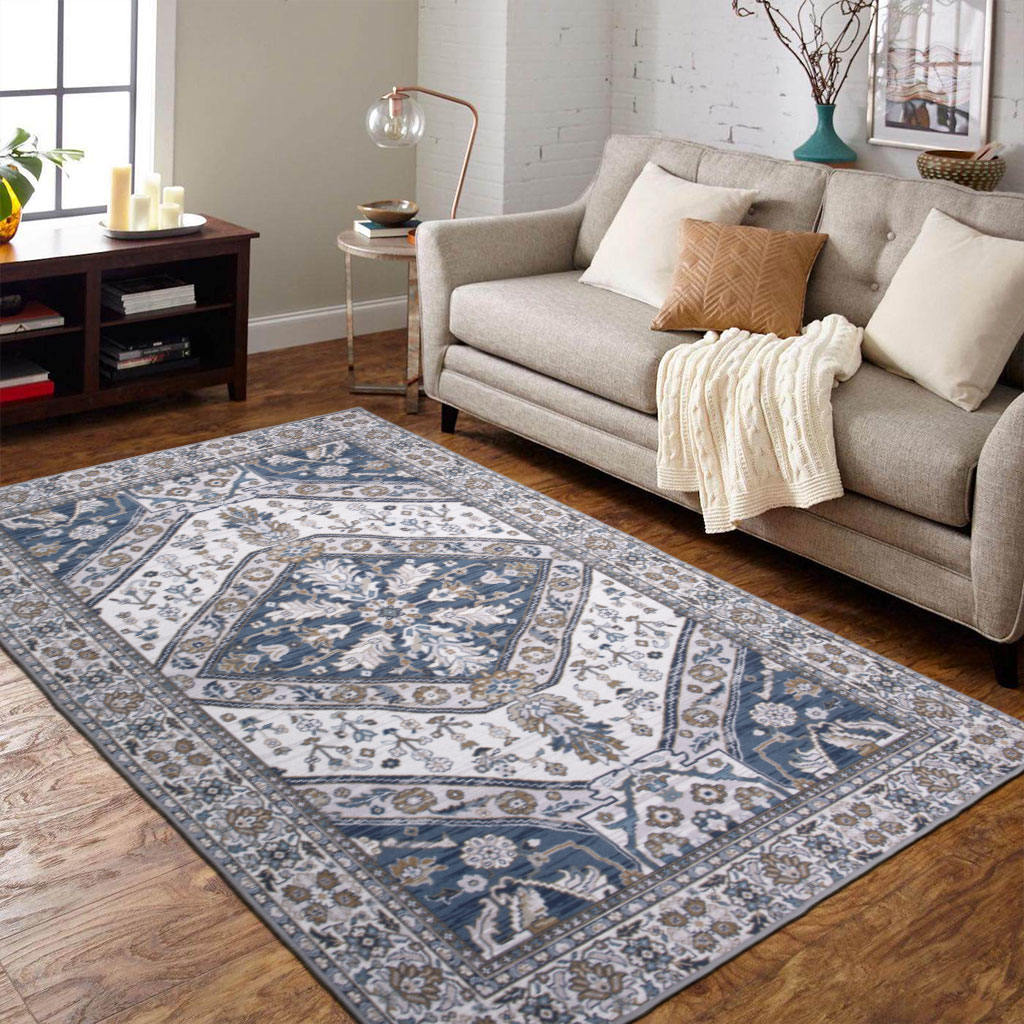
The word "machine washable" is only useful if the carpet actually fits your washer. A rug that is too large will not wash properly, and it can overload the machine or damage the drum. Before choosing sizes, check the capacity of the machines you or your laundry service use.
If your customers use home-size washers, steer them toward thinner, lighter washable carpets. If your customers are commercial laundries, you can offer heavier and larger options.
When you buy in bulk, a small defect becomes a big problem. Ask any machine washable carpet supplier for test reports rather than relying on verbal promises. The following checks are the ones most worth requesting.
It is also smart to run your own sample test. Wash a sample at the temperature you plan to use, at least five to ten times, and compare it with a new piece. Check for shrinkage, shedding, color change, and backing damage.
A machine washable carpet usually has a higher unit price than a basic rug of the same size, so buyers often ask whether it pays off. The answer depends on how often the carpet needs cleaning. The table below compares the main cost factors.
| Factor | Machine Washable Carpet | Traditional Carpet |
| Cleaning method | In-house or laundry washing machine | Steam cleaning or professional service |
| Downtime | Short, swap in a spare rug | Longer, area may be closed while it dries |
| Labor | Low, fits existing laundry routines | Higher, often needs outside crews |
| Hygiene level | Deep wash at higher temperatures possible | Surface cleaning, limited deep sanitizing |
| Upfront price | Moderate to higher | Lower |
| Long-term cost | Lower in high-use settings | Higher from repeated cleaning and replacement |
In high-traffic spaces that need weekly or even daily cleaning, washable carpet typically pays for itself within a few months. In low-traffic areas that are cleaned a few times a year, the savings are smaller, so choose washable pieces mainly for the places where hygiene and appearance matter most.
If you are a distributor, hotel chain, or project buyer, the order details matter as much as the product. A good supplier of washable carpet wholesale orders should be able to answer these questions clearly before you sign anything.
Always order a pre-production sample and approve it in writing. This protects both sides and makes sure the final bulk order matches the quality you tested.
Even the best machine washable rug will wear out early if it is washed incorrectly. Share simple care rules with your staff or customers so the product lasts as long as it should.
Machine washable carpet is not just a convenience feature. For businesses, it is a practical way to control cleaning costs, keep spaces hygienic, and extend product life. The best results come from matching the carpet to the use case, checking size against your washing equipment, and demanding real test data from the supplier. Start with a small sample order, run your own wash tests, and then scale up once you are confident in the quality. A little planning at the start will save you far more in replacements and complaints later.

ADD: No.75 Zhenyuan Road, Yuecheng District, Shaoxing City, Zhejiang Province, China 312000

Tel : +86-189 6750 9795

FAX : +86-0575-8803 2773

Email : fisher@benetextile.com

Copyright © Zhejiang Benyi Textile Technology Co., Ltd. All Rights Reserved. Carpets and Rugs Manufacturer

 English
 Français
 Deutsch
 عربى