

Industry News
 Home / News / Industry News / How to Pick the Right Indoor Carpet Without Wasting Money | Indoor Carpet Buying Guide
 2026.10.26
 Industry News
Buying an indoor carpet looks simple until you stand in a showroom with fifty samples that all feel soft. Color is the easy part. What decides whether you still like the carpet five years from now is the fiber, the pile, the density, and whether it suits the room it goes in. This guide covers the practical details so you can choose indoor carpeting that fits your space, your household, and your budget.
Content
Before comparing samples, think about daily life in the room. A bedroom sees bare feet and very little dirt, so you can choose a softer, plusher indoor carpet there. A hallway or staircase gets constant foot traffic and needs a tighter, harder-wearing construction. A playroom needs something that survives spills, toys, and frequent vacuuming.
Write down three things for each room: how many people walk through it each day, whether pets or small children are present, and whether anyone in the household has allergies. These answers narrow your options faster than any showroom visit.
The fiber is the single biggest factor in how an indoor carpet looks, feels, and wears. Most residential carpet falls into four groups: nylon, polyester, polypropylene (also called olefin), and wool. Each has real strengths and real limits, and the table below shows how they compare in everyday use.
| Fiber | Durability | Stain Resistance | Softness | Price Level |
| Nylon | Excellent | Good (with treatment) | Good | Mid to high |
| Polyester | Moderate | Very good | Very soft | Low to mid |
| Polypropylene | Moderate | Excellent | Fair | Low |
| Wool | Very good | Fair | Excellent | High |
Nylon fibers spring back well after being walked on, which is why nylon indoor carpet is the usual pick for hallways, stairs, and family rooms. It costs more up front but tends to hold its shape for many years.
Polyester has a silky feel and takes rich colors well, so it works nicely in bedrooms and low-traffic living spaces. It tends to mat down faster than nylon under heavy use, so keep it out of main walkways.
Polypropylene resists moisture and stains very well and is often used in basements and for indoor carpet tiles. The fiber crushes more easily than nylon, so a low, dense loop construction usually wears best.
Wool is naturally resilient and feels excellent underfoot. It costs the most and needs gentler cleaning products, but a good wool indoor carpet can last for decades in a low-to-moderate traffic room.
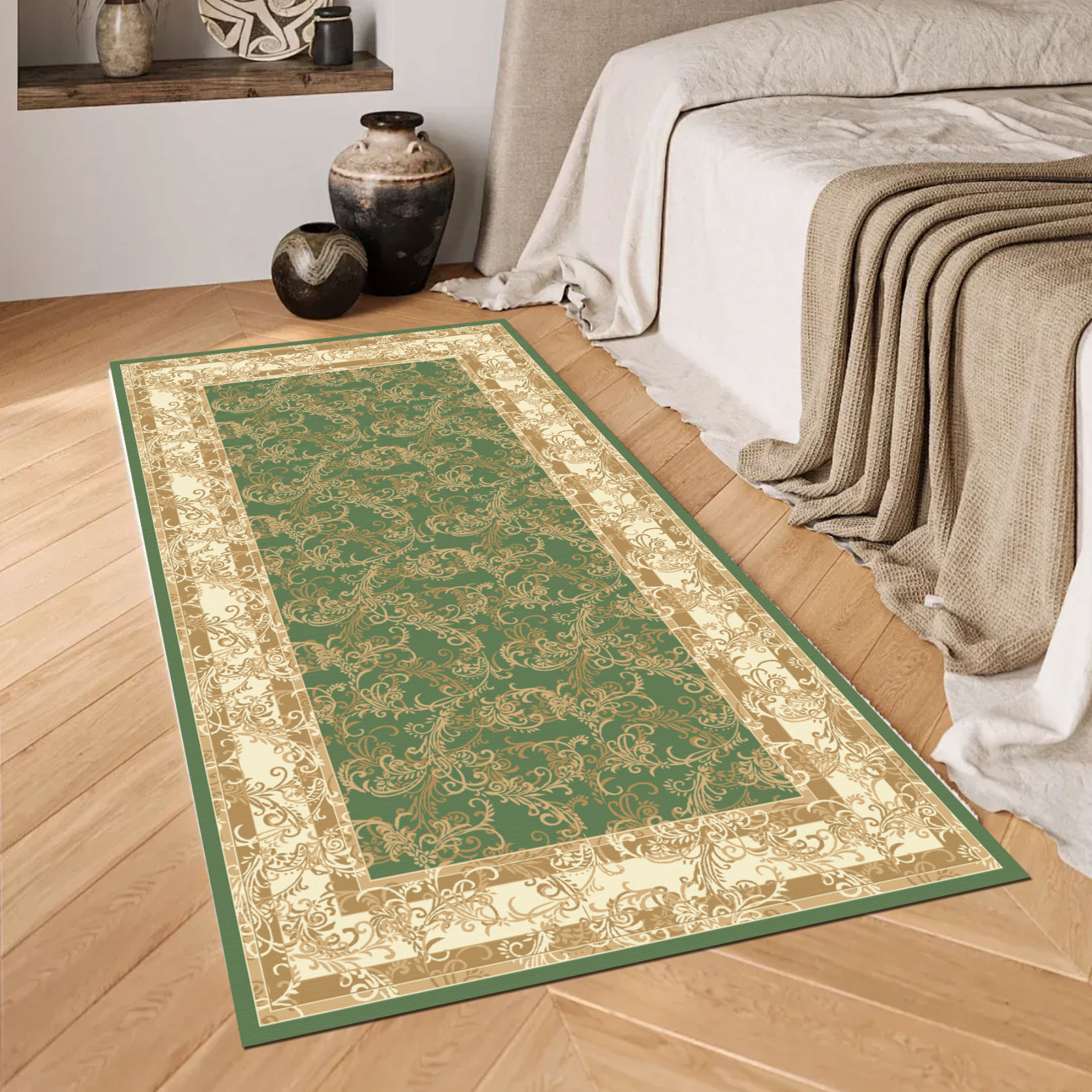
Two carpets made from the same fiber can wear very differently. Pile height, density, and twist level explain why. These are worth checking on the sample label or asking the salesperson about directly.
Low pile (under about half an inch) is easier to vacuum and works well with rolling chairs and furniture. Medium pile gives a balance of comfort and easy care. High pile and shag feel luxurious but trap more dust and crush more easily, so they suit bedrooms and cozy reading corners better than busy walkways.
Density describes how tightly the fibers are packed. Part the pile with your fingers: if you can easily see the backing, the carpet is less dense and will likely wear out sooner. A dense, shorter pile often outlasts a thick but loosely packed one.
A tighter twist helps the fibers hold their shape and resist the flattened, matted look that shows up in high-traffic paths. When comparing two samples, pick the one with the firmer twist for busy areas.
The best indoor carpet for a bedroom is rarely the best choice for a staircase. Use this list as a starting point when planning room by room.
Wall-to-wall indoor carpeting gives a seamless, finished look and is the traditional choice for bedrooms and living areas. Indoor carpet tiles, usually square pieces around 20 inches on a side, are a flexible alternative. They are easier to install yourself, simple to transport, and let you swap out only the damaged section after a spill or pet accident.
| Feature | Wall-to-Wall Carpet | Carpet Tiles |
| Installation | Usually professional | DIY-friendly |
| Repair | Patching is difficult | Replace one tile |
| Look | Seamless and soft | Modular, with creative patterns |
| Best For | Bedrooms, living rooms | Basements, offices, playrooms |
Measure each room at its longest and widest points, then add about 10 percent to cover cuts, pattern matching, and mistakes. Rooms with stairs, closets, or odd angles may need more. Carpet usually comes in 12-foot rolls, so ask your installer how the seams will be placed before you order, because a poorly placed seam in the middle of a doorway shows quickly.
The pad under your indoor carpet absorbs impact, adds comfort, and protects the backing from wear. A pad that is too soft can make the carpet stretch and wrinkle, while one that is too thin wears out quickly. A medium-density pad around 3/8 inch thick is a sensible choice for most rooms, and you can go slightly firmer under low-pile carpet.
Check that the subfloor is clean, dry, and level. On concrete, test for moisture before installing, since trapped dampness can lead to mold and odors. Squeaky or uneven wooden subfloors should be fixed before the carpet goes down, because the carpet will not hide those problems for long.
Regular care does more for an indoor carpet than any expensive product. Grit and dust act like sandpaper on fibers, so removing them often is the best way to extend the carpet's life.
For most water-based stains such as juice or coffee, a few drops of mild dish soap in warm water and gentle blotting is enough. For grease or oil, a small amount of dry cleaning solvent on a cloth works better. Always test any cleaner on a hidden corner first, and avoid soaking the carpet, since too much water can reach the backing and cause odors.
Most regrets come from a handful of avoidable mistakes. Knowing them ahead of time can save you from replacing a carpet long before its time.
The right indoor carpet is the one that suits how you live. Start with the room's traffic level, choose a fiber and construction to match, add a proper pad, and plan on simple, consistent cleaning. If you are torn between two samples, pick the denser one with the tighter twist, since that combination usually holds up best over time. With a little planning, your indoor carpeting will stay comfortable, attractive, and good value for many years.

ADD: No.75 Zhenyuan Road, Yuecheng District, Shaoxing City, Zhejiang Province, China 312000

Tel : +86-189 6750 9795

FAX : +86-0575-8803 2773

Email : fisher@benetextile.com

Copyright © Zhejiang Benyi Textile Technology Co., Ltd. All Rights Reserved. Carpets and Rugs Manufacturer

 English
 Français
 Deutsch
 عربى