

Industry News
 Home / News / Industry News / How to Choose the Perfect Area Rug for Every Room in Your Home | Sizing, Material & Placement Guide
  2026.09.23
 Industry News
Content
Choosing the wrong size is the single most common area rug mistake people make. A rug that's too small makes a room feel disjointed, like the furniture is floating in the middle of nowhere, while a rug that's too big can overwhelm a space and eat into your budget unnecessarily. The general rule of thumb is that your area rug should be large enough for at least the front legs of your furniture to rest on it, which visually ties the seating area together. For dining rooms, the rug needs to be big enough that chairs stay on it even when pulled out. Below is a quick reference table to help you figure out the right area rug size for common rooms in your home.
| Room | Recommended Area Rug Size |
| Living Room | 8' x 10' or 9' x 12' |
| Bedroom (Queen/King) | 8' x 10' (extending past the bed on three sides) |
| Dining Room | At least 24" wider than the table on all sides |
| Entryway | 2' x 3' or 3' x 5' |
| Home Office | 5' x 7' or 6' x 9' |
The material of your area rug affects everything from how it feels underfoot to how easily it stains and how long it lasts. Before falling in love with a pattern or color, it's worth thinking about how the rug will actually be used day to day. A rug in a low-traffic formal living room can afford to be delicate, while a rug in a mudroom or kids' playroom needs to survive spills, mud, and constant foot traffic.
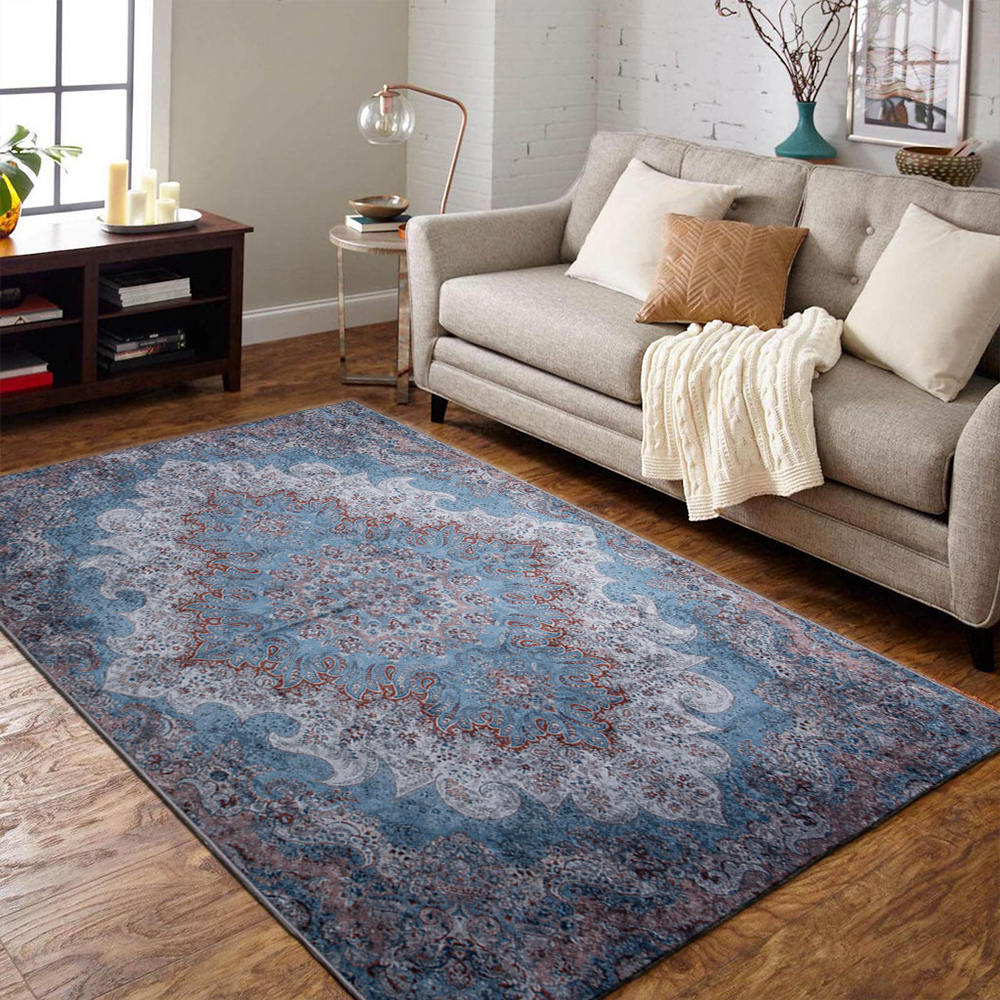
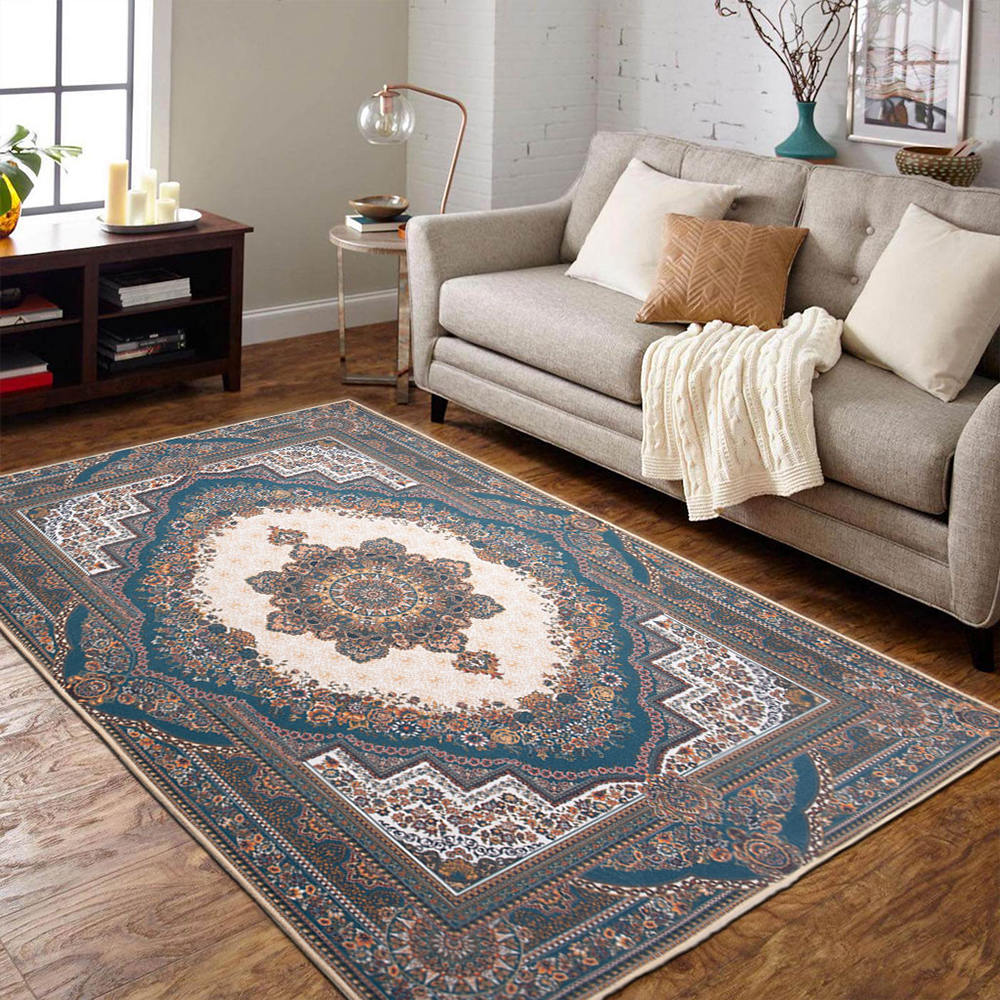
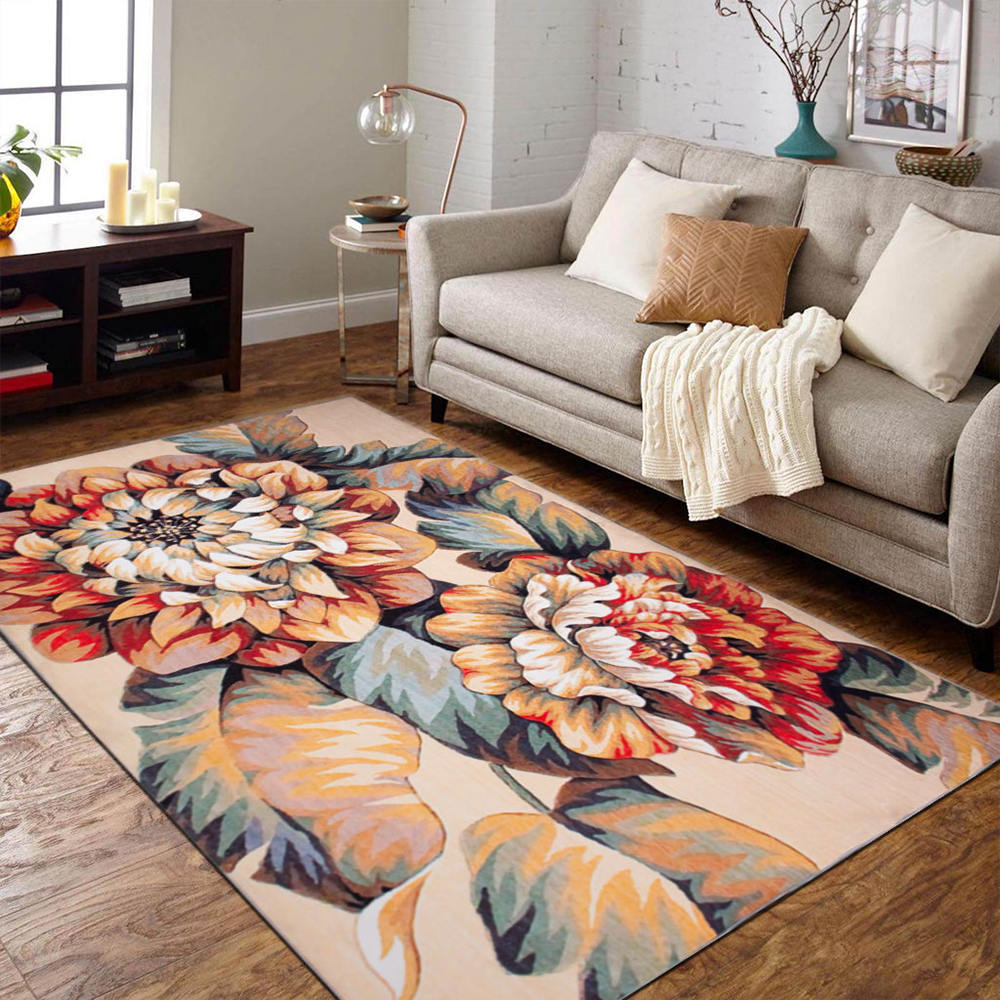
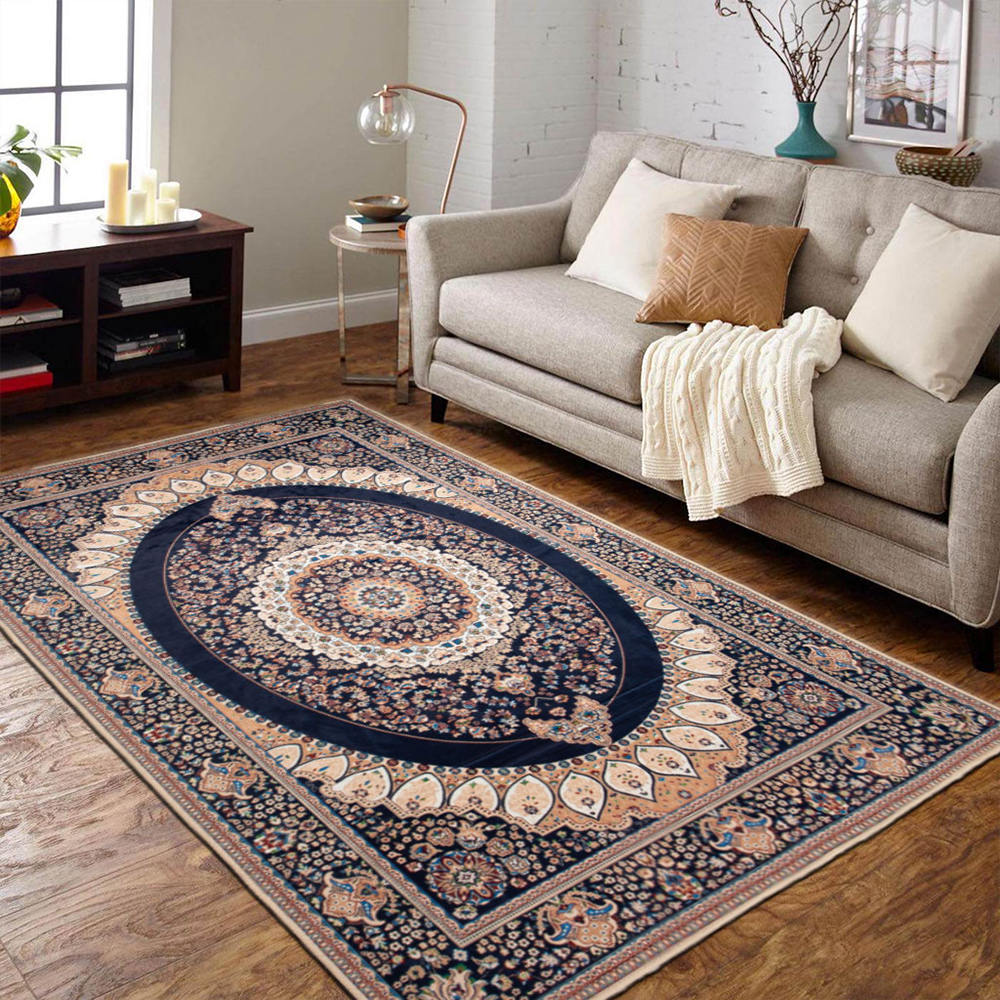
An area rug can either tie a room together or clash with everything around it, so it helps to treat it as one of the last major decisions rather than the first. If you already have patterned curtains, an accent chair, or artwork with bold colors, look at your area rug as the supporting layer rather than the star of the show. A solid or subtly textured rug often works better when the room already has a lot going on, while a patterned rug can add personality to an otherwise neutral, minimalist space.
Color-wise, pulling one or two shades from your existing decor into the rug creates a cohesive look without everything having to match exactly. For example, if your sofa is a warm gray, an area rug with hints of rust, mustard, or navy can complement it while adding visual interest. Don't be afraid to layer a smaller, textured area rug over a larger neutral one either, which is a popular technique for adding depth to open-plan living areas.
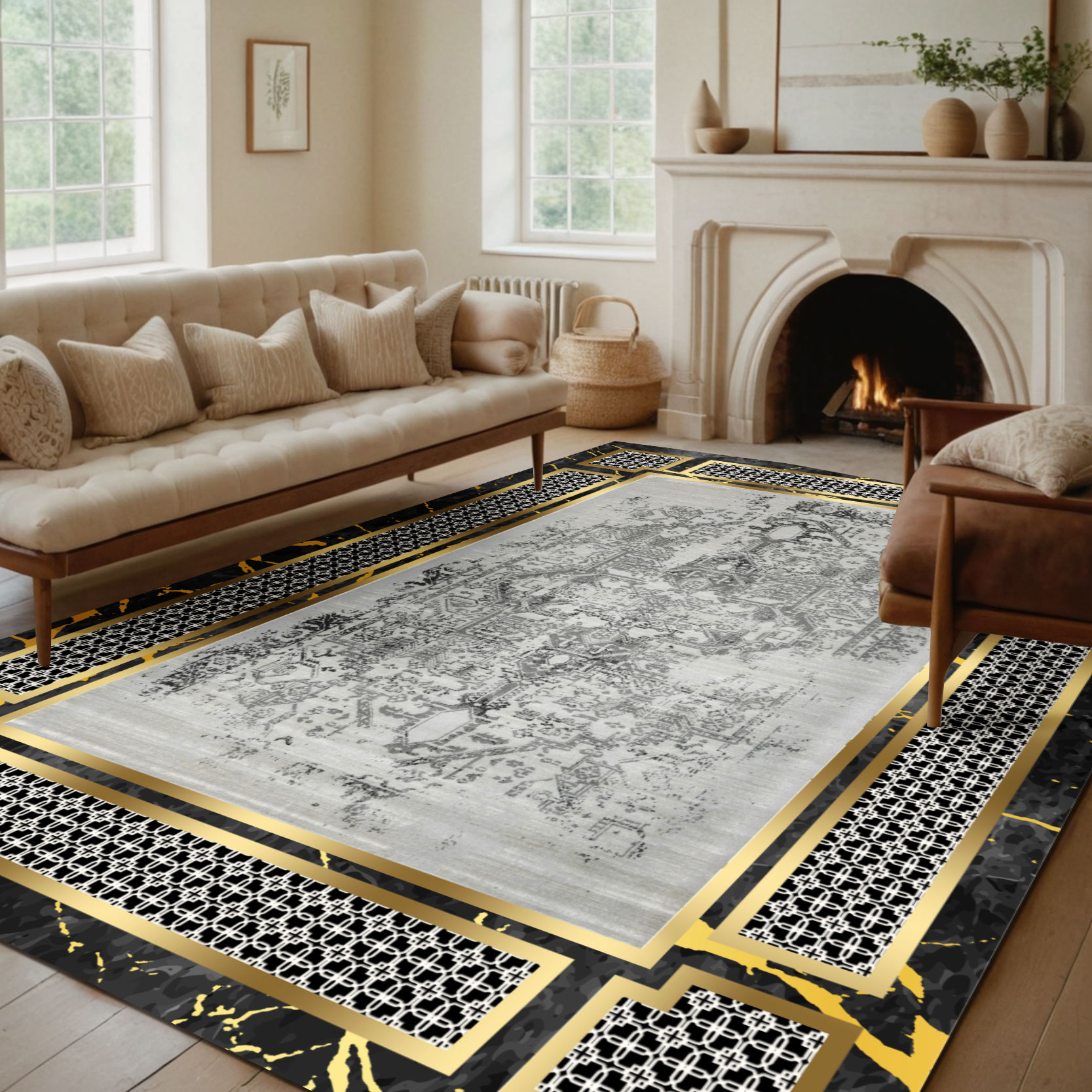
In the living room, the area rug should anchor the main seating group. The most common layout has the front two legs of the sofa and chairs resting on the rug, with the back legs off, which keeps the space feeling grounded without requiring an enormous rug. If your budget and room size allow, having all four legs of every piece of furniture on the rug creates an even more polished, unified look.
For bedrooms, positioning matters just as much as size. A popular approach is to slide the area rug about two-thirds of the way under the bed, so it extends 18 to 24 inches beyond each side and the foot of the bed. This way your feet land on something soft the moment you step out of bed, rather than cold flooring.
In the dining room, center the area rug under the table and make sure it's large enough that chairs remain on the rug even when someone pushes back to stand up. A rug that's too small here tends to catch chair legs and can bunch up over time, becoming both a nuisance and a tripping hazard.
A little routine care goes a long way toward keeping an area rug looking fresh for years. Vacuuming once or twice a week helps remove dirt and grit that would otherwise grind into the fibers and wear them down prematurely. For rugs in high-traffic zones, rotating them every six months evens out sun fading and foot-traffic wear, so the whole rug ages at the same rate rather than developing an obvious worn path.
Even experienced homeowners fall into a few predictable traps when shopping for an area rug. Buying based on a photo alone without checking real-world dimensions is one of the biggest culprits, since rugs almost always look smaller online than they do in a showroom or in your actual room. Skipping the rug pad is another common misstep that leads to slipping, bunching, and faster wear on both the rug and the floor beneath it.
It's also easy to underestimate how much a rug's color and pattern will read differently under your home's lighting compared to a store's lighting or a screen. Whenever possible, order a sample swatch or check the rug in your space during both daytime and evening light before committing. Finally, resist the urge to choose an area rug purely on trend; classic, versatile patterns and neutral bases tend to have a much longer shelf life in your decor than something ultra-trendy that may feel dated in a few years.

ADD: No.75 Zhenyuan Road, Yuecheng District, Shaoxing City, Zhejiang Province, China 312000

Tel : +86-189 6750 9795

FAX : +86-0575-8803 2773

Email : fisher@benetextile.com

Copyright © Zhejiang Benyi Textile Technology Co., Ltd. All Rights Reserved. Carpets and Rugs Manufacturer

 English
 Français
 Deutsch
 عربى
عربى