

Industry News
 Home / News / Industry News / Comprehensive Guide to Selecting, Customizing, and Specifying Jacquard Carpet for Commercial and Project Applications
  2026.02.18
 Industry News
Content
In modern commercial interiors, flooring is no longer a purely functional element. It plays a strategic role in branding, spatial zoning, acoustic control, and user experience. Jacquard carpet stands out in this context because it allows designers and project owners to integrate visual identity directly into the carpet structure itself.
Unlike printed or standard patterned carpets, jacquard carpets embed the design at the yarn level. This means the pattern is not a surface effect but an integral part of the carpet construction, offering longer-lasting aesthetics and higher perceived value—especially important for large-scale or long-term projects.
Before specifying a jacquard carpet, professional buyers should clearly define project parameters. This step significantly reduces design revisions, production delays, and post-installation issues.
Key factors include:
Jacquard carpet is particularly well suited to projects where visual impact must be balanced with operational durability.
Jacquard systems allow designers to move beyond conventional repeat limitations. Patterns can be:
This flexibility is critical for hospitality brands, casinos, and corporate headquarters seeking unique, non-standardized interiors.
One of the strongest advantages of jacquard carpet is the ability to integrate logos and brand elements directly into the carpet surface without printing.
This results in:
For chain hotels or multinational offices, this ensures brand consistency across locations.
Color management is a critical concern in large projects. Jacquard carpets allow:
This is especially important for phased construction projects or long-term supply agreements.
Choosing the correct fiber is essential to ensure that the jacquard carpet performs as intended throughout its lifecycle.
Often specified for airports, hotels, and large office buildings.
Commonly used in budget-conscious hospitality or exhibition projects.
Preferred for luxury hotels, executive offices, and high-end residential projects.
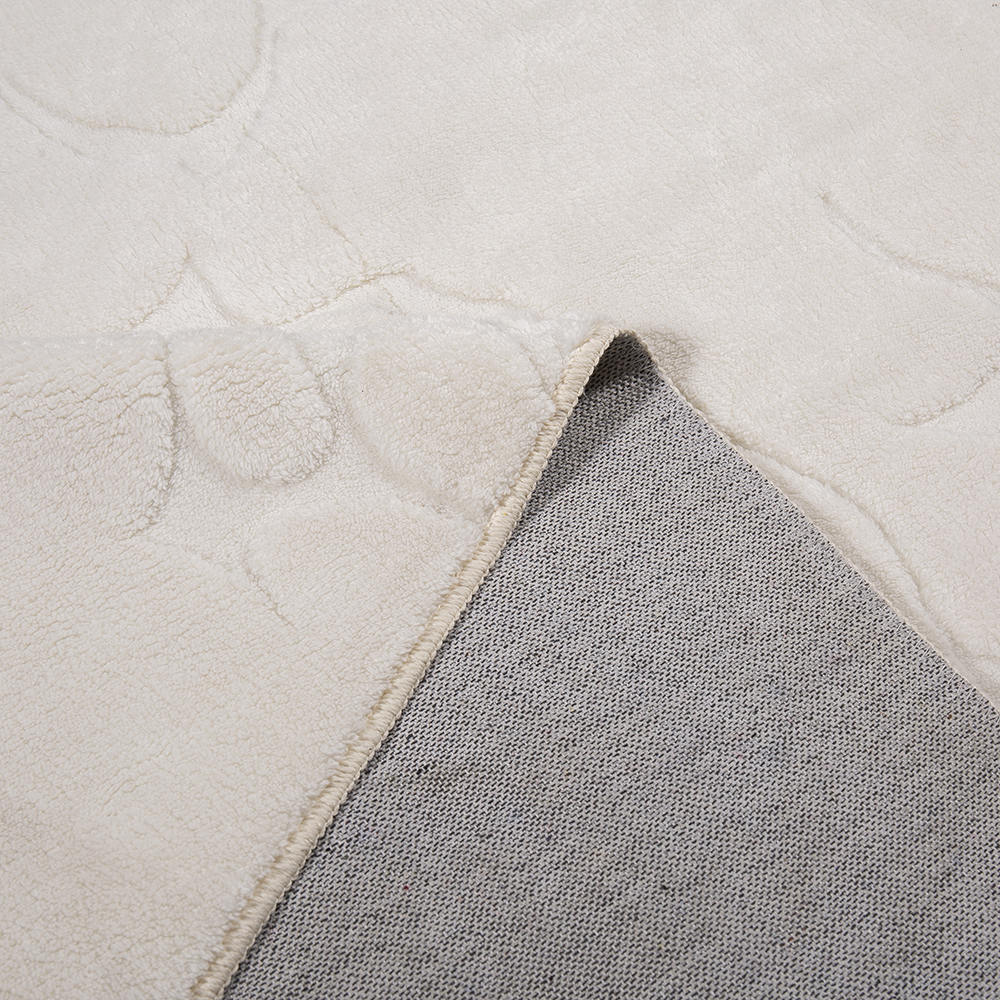
Beyond fiber type, several structural parameters influence performance:
Professional buyers should review these parameters alongside design samples.
The backing system plays a decisive role in installation quality and long-term stability.
Common options include:
Proper alignment between backing type, subfloor condition, and installation method ensures optimal performance.
A structured customization process reduces risk and ensures technical feasibility:
Early-stage technical communication between buyer and manufacturer is essential to avoid cost overruns and delays.
For commercial projects, jacquard carpets must meet relevant standards, such as:
Reliable manufacturers will provide technical data sheets and test reports as part of the approval process.
Jacquard carpets are designed for long-term use when supported by proper maintenance strategies:
From a lifecycle perspective, jacquard carpets often deliver lower total cost of ownership compared to cheaper, short-lifespan alternatives.
Jacquard carpet is not simply a decorative flooring option—it is a strategic, customizable, and performance-driven solution for modern commercial and project environments. By carefully aligning design intent, material selection, construction parameters, and manufacturing capabilities, buyers can achieve flooring solutions that support both visual identity and long-term operational performance.

ADD: No.75 Zhenyuan Road, Yuecheng District, Shaoxing City, Zhejiang Province, China 312000

Tel : +86-189 6750 9795

FAX : +86-0575-8803 2773

Email : fisher@benetextile.com

Copyright © Zhejiang Benyi Textile Technology Co., Ltd. All Rights Reserved. Carpets and Rugs Manufacturer

 English
 Français
 Deutsch
 عربى
عربى