

Industry News
 Home / News / Industry News / Jacquard Carpet – Manufacturing Technology, Structural Design, and Performance Analysis
  2026.02.11
 Industry News
Content
A Jacquard Carpet is a high-precision carpet produced using a jacquard-controlled weaving or tufting system, where each yarn end can be independently controlled according to a digital pattern program. Unlike conventional carpet production methods that rely on limited pattern repeats or color blocks, jacquard technology allows for complex, multi-layered, and non-repetitive designs with exceptional accuracy.
From a manufacturing perspective, jacquard carpet is not merely a decorative upgrade. It represents a structural and technological evolution in carpet engineering, enabling greater control over pattern density, color placement, and surface texture. This makes jacquard carpet particularly suitable for projects where visual identity, branding, and architectural harmony are critical.
The performance of a jacquard carpet begins with yarn selection. Commonly used fibers include polypropylene, nylon, polyester, and wool, each offering distinct mechanical and aesthetic properties.
Before weaving or tufting, yarns are carefully wound, tension-controlled, and often heat-set to ensure dimensional stability during production.
The defining feature of jacquard carpet production is the electronic jacquard head, which controls thousands of yarn ends individually. This system allows manufacturers to translate complex digital designs directly into physical carpet structures.
Key technical advantages include:
This level of control is essential for custom carpets used in hotels, casinos, and commercial branding projects.
Once the surface structure is formed, the carpet undergoes backing and finishing operations to enhance durability and usability.
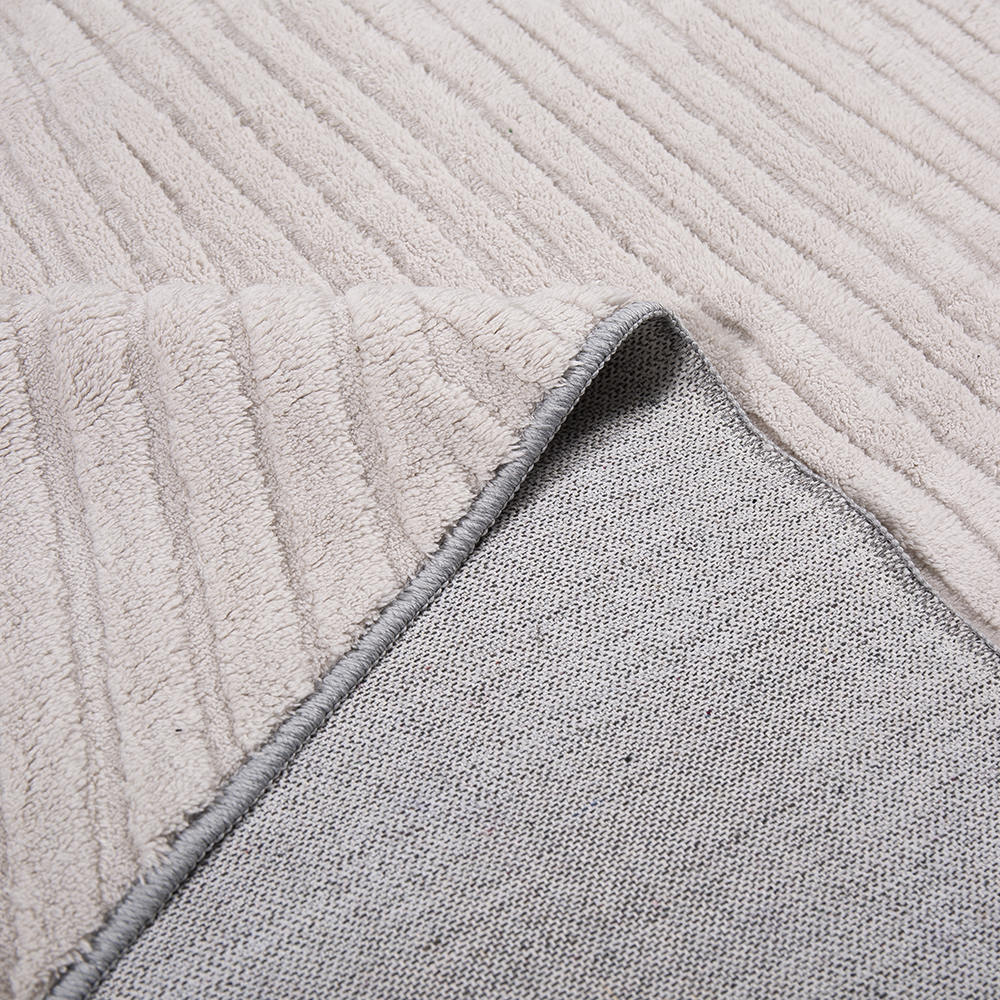
Finishing steps such as shearing, brushing, embossing, and heat-setting ensure uniform pile height, surface smoothness, and long-term shape retention.
Jacquard carpets are structurally distinct from printed or standard tufted carpets due to their yarn-level pattern construction.
Key structural characteristics include:
These characteristics contribute to both aesthetic quality and functional performance.
From a performance standpoint, jacquard carpets deliver measurable benefits:
These features make jacquard carpets a reliable flooring solution for long-term projects.
Jacquard carpets are widely specified in environments where design identity and performance must coexist:
Their ability to combine custom aesthetics with industrial reliability positions jacquard carpets as a premium yet practical flooring category.
Professional buyers should assess jacquard carpets based on:
A thorough technical evaluation reduces project risk and ensures long-term satisfaction.
Jacquard carpet is a technologically advanced flooring solution that integrates precision manufacturing, flexible design capability, and dependable performance. For buyers seeking differentiated interiors without compromising durability, jacquard carpet represents a strategic investment rather than a commodity product.

ADD: No.75 Zhenyuan Road, Yuecheng District, Shaoxing City, Zhejiang Province, China 312000

Tel : +86-189 6750 9795

FAX : +86-0575-8803 2773

Email : fisher@benetextile.com

Copyright © Zhejiang Benyi Textile Technology Co., Ltd. All Rights Reserved. Carpets and Rugs Manufacturer

 English
 Français
 Deutsch
 عربى
عربى